
Two wardrobes. One closet. And somehow the floor has become the overflow department. You don’t need a dramatic renovation to make sharing a small closet easier—you need a setup that works for both people.
Start here: Give each person a clear zone, keep daily essentials within reach, and use the vertical space only where it actually fits. Before buying a single basket, measure the closet and count what needs to hang. That little reality check will save you from an organizer that looks great online but steals half your rod space.

This post contains affiliate links. If you buy through one, we may earn a small commission at no extra cost to you. We only recommend shopping when it solves an actual storage problem.
Start With a Fair Split, Not a Perfectly Symmetrical One
Two people rarely own the same amount of hanging clothes, shoes, or folded pieces. Take everything out long enough to see what you actually have, then divide the closet by storage needs—not by drawing an imaginary line down the middle. One person may need more rod space while the other needs drawers. That’s still a fair setup if both can find their things.
Try a real-life split: If one person has mostly shirts and work pants while the other has dresses and bulky sweaters, a strict 50/50 division makes little sense. Give the shirts more short-hanging space, reserve one uninterrupted area for longer pieces, and let folded sweaters use shelves or drawers. A 60/40 split can be fair when both people can get dressed without moving each other’s clothes.
First, group clothes into four piles: short hanging, long hanging, folded items, and shoes. Count the everyday pieces in each pile. Build the layout around what you actually wear—not the ten jackets you might need one day.

Give Each Person a Home Base
Choose one clearly defined section for each person: a hanging zone, a shelf or drawer, and a place for shoes. Shared items, like extra bedding or travel bags, belong in a separate zone. This is the difference between a shared closet and a daily game of whose sweater is this.
Make ownership obvious: Choose a left/right or upper/lower arrangement and stick to it. Put each person’s everyday items between shoulder and knee height when possible, and use the highest shelf for luggage or seasonal clothes. Leave a small shared area for things you both use. If baskets all look alike, simple labels beat guessing before coffee.

Worth considering if: watches, jewelry, belts, and other small things keep migrating between drawers. An insert with separate compartments gives each person a landing spot. Measure the inside of the drawer first; you can also reuse small containers you already own.

8-Section Drawer Organizer
Make the Hanging Rod Work Harder
Group short pieces together so you can see whether a second hanging rod would fit beneath them. Keep dresses and coats together where they have room to hang freely. Before adding a rod, measure the available height and follow the installation and weight requirements. More hanging space only helps if clothes aren’t dragging on everything below.
Check before adding a second rod: Hang your longest short garment on the current rod, then measure the empty space beneath it. Allow room for the second rod, the clothes on it, and any shoes or baskets below. If there isn’t enough clearance, use a hanging shelf for folded items or keep a single rod instead. For renters, choose removable accessories or get permission before mounting hardware; even “no-drill” solutions have weight limits.

Solve the Shoe Problem Without Blocking the Door
Keep frequently worn shoes at the front and move occasional pairs higher or elsewhere. A low rack can help, but measure the floor depth with the door closed first. If you have to step over the rack to reach your clothes, it’s not solving the problem.
Use this test: Put a cardboard box where the shoe rack would go, close the closet door, and try reaching the clothes above it. If the space suddenly feels cramped, store the everyday pairs in a shallow row and move occasion shoes under the bed or onto a higher shelf. You want the floor back—not another obstacle course.

Worth considering if: both people have everyday shoes piling up on the floor. A tiered rack can use vertical space, but check its width, depth, and height against the real opening. A three-tier rack is not the right buy if it blocks the door or hanging clothes.

3-Tier Shoe Rack
Make Room for Different Morning Routines
If one person gets ready earlier, put their everyday clothes and accessories where they can reach them without digging through the other person’s things. Small details—separate accessory trays, labeled baskets, and an easy-to-reach hamper—can make rushed mornings much calmer.
Give the earlier riser the easiest-to-reach section and keep tomorrow’s outfit toward the front. Put watches, belts, and small accessories in one consistent spot. If one person’s shoes are always left out, add a drop zone for those pairs instead of expecting a perfect end-of-day routine. The best layout works on a messy Tuesday, too.

Worth considering if: accessories, socks, or grab-and-go items need a home but the shelves are full. An over-door organizer may help without using rod space. Before ordering, check door clearance, the thickness of the hooks, and whether the door can still close completely.

Over-Door Storage Organizer
What to Buy (and What to Skip)
Buy for a specific bottleneck. A narrow drawer unit helps with folded clothes; shelf dividers help keep stacks separate; a lightweight over-door organizer can hold accessories when the door allows it. Skip matching containers until you’ve measured the shelves and figured out what needs to live there. Cute storage is not a substitute for usable storage.
Quick buying checklist: Measure (1) the clear width of your hanging rod, (2) usable shelf depth, (3) interior drawer dimensions, and (4) door swing and floor clearance. Buy for the one area that keeps failing—not for a matching set of bins that may not fit.
Budget-first rule: Start with what you already have: matching up hangers, moving rarely worn clothes elsewhere, and repurposing a small tray can cost nothing. If you do spend money, choose the one upgrade that fixes the biggest daily frustration. Rod space disappearing? Don’t buy a hanging shelf. Folded clothes everywhere? A hanging shelf or narrow drawer unit may help more than another set of hangers.
If folded clothes are the real problem: a hanging shelf gives sweaters or tees their own spots without adding permanent shelves. It does take away hanging width, though, so skip it if both sides of the rod are already tight.
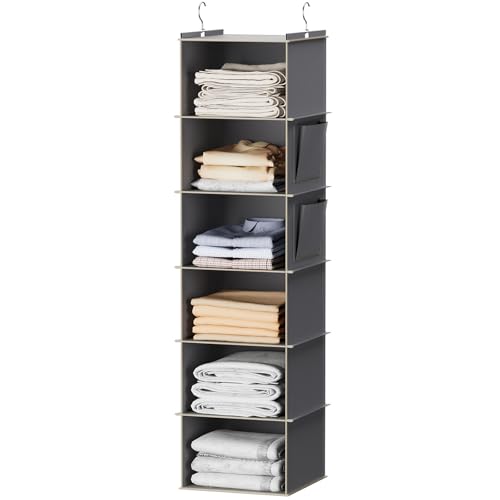
6-Shelf Hanging Organizer
The Ten-Minute Shared Closet Reset
Once a week, both people put stray items back, remove empty hangers, and check the floor and shared shelf. If one area keeps overflowing, revisit the layout together. The goal isn’t a closet that looks staged on Sunday. It’s one that still works on Thursday.
Your ten-minute reset: Spend three minutes returning stray clothes and shoes, three putting empty hangers back together, two clearing the floor, and two checking whether either person’s zone is overflowing. If the same spot fails every week, give it more space or move something out. That’s a layout problem, not a reason to buy more baskets.

For the basics that work in nearly any tiny closet, start with our small closet organization guide.