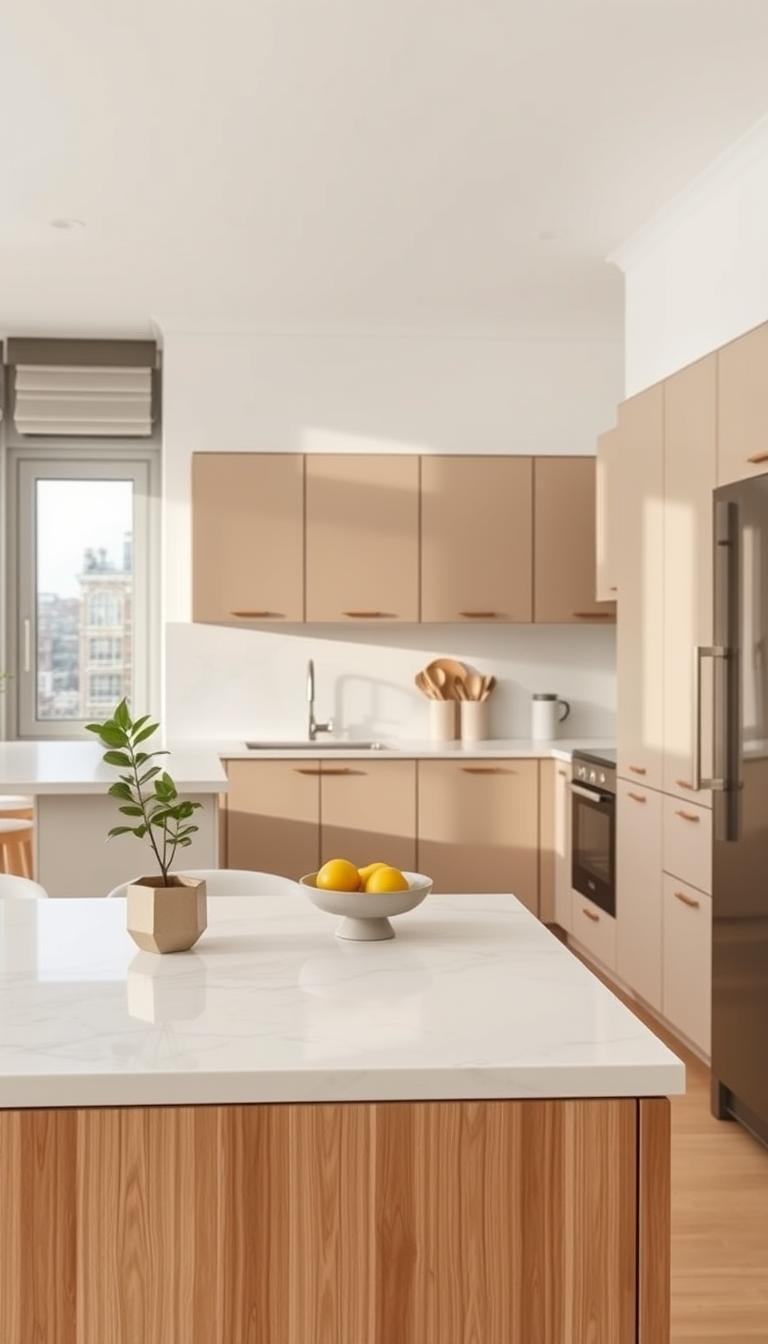
Kitchen Cabinet Organization That Actually Works
Affiliate disclosure: As an Amazon Associate, Aesthetic Home Edit may earn from qualifying purchases at no extra cost to you.
Ever open a kitchen cabinet and wonder how you own so many bowls but still can’t find the one you need?
Or maybe you’ve got one pot buried behind three others, a lonely lid, and a cabinet door that’s holding on for dear life.
The fix usually isn’t a bigger kitchen. It’s making the space you already have easier to use.
Here’s the simple rule: Keep the things you use most within easy reach. Put heavy stuff down low. And stop letting the back of a deep cabinet become a black hole.

You don’t have to spend your weekend taking apart the whole kitchen, either. Pick the cabinet that makes you sigh every time you open it. We’ll start there.
Below are ten practical ways to organize your kitchen cabinets, from the upper shelves to that awkward corner where cookware goes to disappear.
We’ll keep it real. Some ideas are free, some use a simple organizer, and a few are worth shopping for if the cabinet is making your life harder.
The goal isn’t to own matching bins. It’s to grab your favorite mug without moving a dozen other things first.
What belongs in upper cabinets

Keep lighter, everyday dishes where you can reach them without stretching.
Mugs, plates, cereal bowls, and glasses usually make sense in upper cabinets near where you use them. Give the easiest shelf to the things you grab almost every day.
That big serving platter you bring out for Thanksgiving? It probably doesn’t need the best spot all year.
Put occasional items higher or farther back, but only where you can lift them safely. Don’t build a tower of dishes that makes you nervous every time you open the door.
If the cabinet has a lot of wasted height, a sturdy shelf riser might help. Just make sure there’s enough room to lift everything out without banging it into the shelf above.
Try the one-hand test: can you grab your daily mug and put it back without moving something else?
If not, the setup needs a little more room.
What belongs in base cabinets

Heavy pans, big bowls, and bulky gear belong down where they’re easier to lift.
There’s no prize for dragging a cast-iron pan down from an upper shelf. Your back would probably like to unsubscribe from that plan.
Store your everyday pots and pans in a lower cabinet near the stove when the layout allows it. Keep the favorites toward the front.
Tuck the slow cooker, giant mixing bowl, or holiday cookware farther back if you don’t reach for it often. But don’t wedge anything so tightly that it scrapes or tips when you pull it out.
A simple divider or pull-out shelf can help in some cabinets. Measure the actual opening, hinges, and pipe clearance first.
You want less wrestling with cookware, not a fancy organizer that gets stuck halfway out.
Making deep shelves usable

Give the front of a deep cabinet to daily items and keep the extras in easy-to-pull groups behind them.
Deep cabinets look roomy until you’re on your knees searching for the lid you know you own.
Start by moving everything out so you can see what’s hiding back there. Set aside the things you use often, the things you sometimes use, and the stuff that belongs somewhere else.
Put everyday items in a clear front row. Place less-used pieces behind them in shallow trays or baskets you can pull forward together.
Keep the containers low enough that you can see what’s inside. A tall bin can turn one storage problem into a new one.
Before buying a sliding shelf, test the motion with a tray you already have. Make sure it can come forward without hitting a hinge or nearby door.
If you’d rather have a real slide-out shelf, the Lynk Professional pull-out cabinet shelf is a sturdier option for deep cabinets. Measure the cabinet opening and check the installation instructions first—this one mounts in place.

If you have to empty the whole shelf to get one thing, it’s time to rearrange it.
Organizing by reach and how you cook

Put what you use together near the spot where you use it.
Think about what happens when you make dinner. You grab a cutting board, a knife, a pan, some spices, and maybe a bowl.
Those things don’t all have to live in one cabinet. But they shouldn’t send you on a walking tour of the kitchen.
Keep prep dishes and mixing bowls close to your prep area when you can. Store your everyday cookware near the stove and serving dishes near the spot where meals get plated. For anything staying on display, our kitchen counter decor ideas help keep the prep zone clear.
Of course, every kitchen is different. A baker might need mixing bowls within reach more than someone who orders takeout and calls it a night. No judgment.
Watch yourself cook a normal meal, then move the things you keep walking back and forth to get.
Your routine is a better guide than a picture of somebody else’s perfect kitchen.
Containment strategies without overbuying

Use a few simple containers to keep small items together. Don’t buy an entire matching-bin collection before you know what you need.
It’s easy to get carried away shopping for organizers. Suddenly you’ve spent money to store things you forgot you owned.
Start with shallow trays or baskets you already have. Group items that belong together, like tea supplies, food-storage lids, or baking extras. When dry goods have taken over several cabinets, try our pantry organization guide for simple grouping ideas.
If container lids are the main troublemakers, the YouCopia StoraLid organizer keeps them standing in separate slots. Check the organizer size against your cabinet before adding it to your cart.

Leave enough room to lift each group out. If a container has to be squeezed around other stuff, it’s not making life easier.
One sturdy shelf riser can be useful if you have extra vertical space. But don’t stack organizers just because a photo made them look cute.
Measure the cabinet. Test the idea. Then shop for the gap you actually need to fill.
The less complicated it is, the more likely everyone will put things back.
Storing flat and odd shaped items

Store baking sheets, cutting boards, and big platters upright when the cabinet has room.
Stacking flat things sounds reasonable until you need the one at the bottom.
A stable upright divider lets you slide out one sheet pan without lifting the entire pile. Think of it like a filing cabinet, but for the stuff you cook with.
Keep the tallest pieces where they won’t scrape the top or hit the door. If the pieces start leaning or sliding, give them a better support.
A lower cabinet often works well here because you can see and reach the slots without balancing a heavy tray above your head.
You don’t need a built-in rack, either. A sturdy freestanding divider may do the job.
The YouCopia StoreMore bakeware rack is worth a look if your baking sheets and cutting boards keep tumbling over. Its adjustable dividers hold them upright without a permanent installation.

Just don’t force an oversized cutting board into a tiny slot. That usually ends with someone losing an argument to a cabinet.
Solutions for lids spices and small containers

Give lids and little containers their own spots so they stop wandering around the shelves.
Container lids have a special talent for vanishing. Then they reappear right after you’ve thrown out the matching container. Naturally.
Group lids by size or type in a shallow tray. Keep everyday containers nearby, but don’t stack so many that getting the bottom one becomes a project.
For spices, put the jars you use most where the labels are easy to see. A small riser or low tray may help if your cabinet is deep.
A Zri expandable bamboo spice riser can help you see the jars behind the front row. Measure your shelf and tallest spice bottles first. A riser that stops the cabinet door from closing isn’t helping anybody.
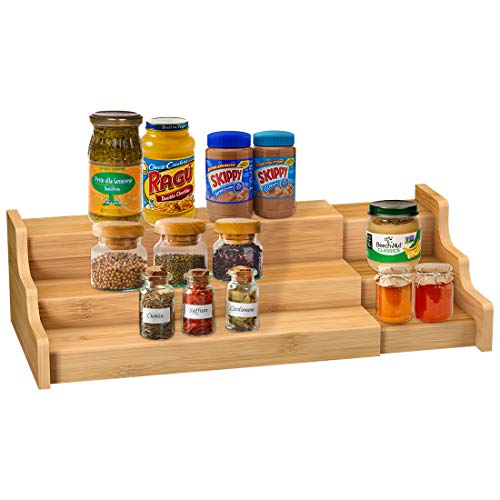
You don’t have to alphabetize everything. Grouping by how you cook often makes more sense: everyday seasonings together, baking spices together, and extras out of the way.
Check expiration dates when you put everything back.
If there’s a mystery jar in the back that hasn’t been opened in years, you probably don’t need to make space for it.
Renter friendly quick installs

You can make kitchen cabinets easier to use without drilling into them.
Freestanding shelf risers, removable trays, and simple dividers can add usable space without changing the cabinet itself.
That’s handy for renters, but it’s also nice when you don’t want to turn an afternoon cleanup into a renovation.
Before using hooks or adhesive organizers, check the cabinet finish and the product’s removal instructions. Some finishes don’t appreciate surprises.
Test the doors with everything in place. A shelf organizer isn’t helpful if it keeps the cabinet from closing.
Keep heavy things on stable surfaces and follow weight limits and anchoring instructions.
And measure before ordering. "Looks about right" is how a very confident organizer becomes a return.
Small daily habits that keep order

Make it easy to put things away and you’ll spend less time fixing the cabinet later.
An organized cabinet has to survive real life. That includes grocery day, dishwasher unloading, and someone shoving a bowl wherever it fits.
Keep broad categories that everyone can understand. Plates go here. Mixing bowls go there. Backup supplies stay in their own spot.
When you unpack groceries, check what you already have before adding more to the shelf. Put suitable older pantry items where they’ll get used first.
If the same thing keeps getting left in the wrong place, notice why. Maybe its assigned spot is too high, too crowded, or on the other side of the kitchen.
Fix the spot before you start giving everyone a lecture about organization.
Nobody wants a cabinet system that needs its own instruction manual.
Before and after staging that actually helps

A good cabinet makeover isn’t about hiding everything. It’s about making the useful stuff easy to grab.
Pick one cabinet to test. Take everything out, wipe the shelves, and decide what truly belongs there.
Put the items you use most back first. Give each group enough room to move, then add the occasional pieces.
Now open the door and pretend it’s a busy weekday. Can you reach what you need without moving three other things?
Can someone else in your home find the extra plates?
If the answer is yes, you’re onto something. If not, shift things around before you buy anything.
A calm kitchen doesn’t need perfect shelves. It needs shelves that work for the people living there.
The takeaway: Start with the cabinet that gives you the most trouble. Make that one easier to use, and the next one will be a whole lot simpler.