
A walk-in closet sounds like a storage dream until you step inside and realize there’s nowhere to stand. The fix isn’t always more shelves. It’s a layout that gives every inch a useful job.
If your small walk-in closet has clothes packed along every wall but still feels impossible to use, start with the layout—not another shopping cart full of baskets. The easiest wins often come from opening up a walking path, moving everyday pieces closer to the door, and swapping storage that sticks out too far for something shallower.
The quick version: Clear the floor, measure the usable walls, decide what truly needs hanging space, and test your new layout before buying anything. You don’t have to turn your closet into a showroom. You just need to find your shoes on a Monday morning.

This article contains affiliate links. If you make a purchase through one, we may earn a commission at no extra cost to you. Every product suggestion is optional—measure your space before buying.
Start With the Walking Space
A walk-in closet is only useful if you can actually walk into it. Before buying shelves or drawers, clear the floor and check how the door swings, where you stand to choose clothes, and which corners are hardest to reach. Don’t let a new storage piece steal the only comfortable path through the room.

Try the doorway test. Stand where you naturally get dressed and reach for an outfit. Can you turn around without brushing against hanging clothes? Can the door open completely? Can you pull a drawer all the way out while you’re standing in front of it? If not, that’s the first problem to solve.
Before moving anything heavy, tape the footprint of a possible shoe rack or drawer unit onto the floor. Walk around it, open the door, and mimic taking clothes off the rod. It’s a much easier way to discover that the “perfect” organizer would make your closet less useful.
Give Every Wall a Job
Instead of filling every wall with the same kind of storage, assign jobs. One wall can hold everyday hanging clothes, another can handle folded pieces and accessories, and the far wall can store shoes or less-used items. Keep the most-used categories closest to the entrance. A closet works better when you don’t have to cross it six times to get dressed.

Which small walk-in layout makes sense? Let your room’s shape answer that question instead of forcing a Pinterest-perfect design into a space that can’t hold it.
- One main storage wall: Good for particularly narrow walk-ins. Keep the opposite wall mostly clear or use only very shallow accessories.
- L-shaped layout: Useful when two adjoining walls can hold hanging clothes and shelves without crowding the aisle. Keep the entrance side easy to reach.
- U-shaped layout: Can make use of three walls, but only when clothes, drawers, and shoes still leave a practical walking and turning space. Don’t force it into every small closet.
Whichever shape you use, put your everyday outfits near the entrance, folded items in the easiest-to-reach shelves or drawers, and occasional pieces toward the back or upper shelves. That’s the part that makes the layout feel good on a busy weekday.
Use Corners Without Creating Dead Zones
Corner rods and shelves can be awkward because clothes overlap and baskets disappear behind other things. Keep the corner for occasional items or use shallow, easy-to-reach storage. If an organizer makes the corner harder to access, leave that space simpler.

One trick that actually helps: pull the most-used categories away from the inside corner so sleeves and hangers don’t collide. Store a travel bag, seasonal accessories, or lightweight labeled bins in the awkward spot instead. If you have a corner shelf, avoid stacking containers two or three deep; the thing at the back might as well live in another house.
Choose Between More Hanging and More Shelves
Look at your actual wardrobe. Lots of shirts and pants? Double hanging may help. More sweaters, jeans, and workout clothes? Drawers or shelves may be better. Keep enough full-height hanging space for long pieces. The right mix depends on what you wear, not what a showroom closet looks like.

Do a ten-minute wardrobe count: Separate your clothes into short-hanging items, long-hanging items, and folded items. If shirts and pants are taking up most of the closet, a second rod may create useful space beneath the first. But leave enough vertical clearance so the lower clothes aren’t squashed. Dresses and long coats still need a full-height section.
For sweaters and workout clothes, shallow shelves or drawers usually make more sense than stuffing everything onto hangers. Keep shelf stacks short enough that you can remove one piece without taking down the whole pile. If the closet is shared, give each person a clearly defined home base rather than making every shelf a negotiation.
Worth considering if: folded shirts or sweaters are taking over the rod. A hanging shelf can add open cubbies without installing built-ins, but it uses hanging width, so skip it if the rod is already crowded.

5-Shelf Hanging Organizer
Keep Shoes Visible, Not Everywhere
Use the lowest accessible shelf or a shallow rack for regular shoes, and keep occasional pairs higher or in another location. Check that shoes don’t spill into the walking path. If you can’t see the pairs you own, you may need fewer layers of storage—not more.

Decide which shoes actually belong here. Keep your weekly rotation in one visible row or on a shallow rack. Move special-occasion shoes to labeled boxes higher up, and let off-season pairs live elsewhere if there’s room. A tall rack isn’t automatically better: check whether you can reach the back pairs and still walk through the closet comfortably.
Try standing a box where a rack would go before you purchase one. If it catches your hip every time you turn, the rack won’t magically feel smaller after assembly.
Worth considering if: the closet has a clear stretch of floor beneath short-hanging clothes. A low shoe rack can keep frequently worn pairs together. Check its actual assembled height and depth first; skip it if the aisle is already narrow.

3-Tier Shoe Rack
Make It Feel Calm Without Losing Function
Good lighting, visible categories, and a little open space often do more than a matching basket collection. Keep labels simple, avoid stacking heavy bins overhead, and make sure drawers can open fully. A small walk-in should feel easy to use, not like a puzzle you solve every morning.

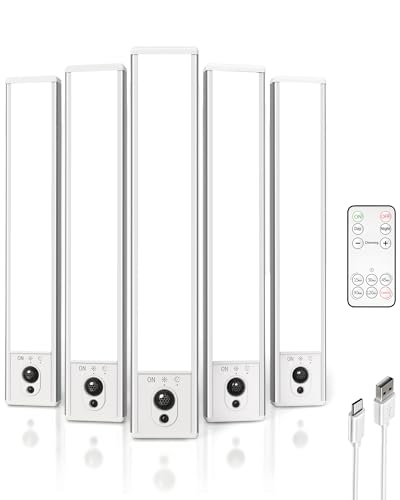
Lighting is worth fixing early. If the overhead fixture leaves the lower shelves in shadow, a rechargeable motion-sensor light can make dark corners easier to see without a new electrical installation. Follow the maker’s mounting and charging instructions, and don’t put lights where they get crushed by hangers or clothing.
Worth considering if: your closet’s back wall or lower shelves are hard to see. These motion-sensor lights are a bright, cool-white option, not a warm ambient glow. Check the color temperature, charging method, and mounting clearance before choosing them for your space.
Motion-Sensor Closet Lights
Then keep the visual side simple: one place for bags, one tray for accessories, and a little breathing room between categories. Matching baskets can be pretty, but being able to find your favorite jeans beats matching baskets every single time.
A Quick Layout Check Before You Spend
Measure each wall, note outlets and door clearance, and sketch where long hanging, short hanging, folded storage, and shoes will go. Try rearranging what you already own before investing in built-ins. If a new piece doesn’t improve access or capacity, it probably doesn’t belong here.
Five measurements to write down: the width of each usable wall, the depth of existing shelves, the height under each hanging rod, the amount of room a drawer needs to open, and the clearance around your door. Note any outlets, vents, or sloped ceiling areas before you sketch the layout. Your measurements—not an online product photo—tell you what will fit.
A budget-friendly order of operations: First, remove what doesn’t belong. Next, group clothes by how you use them and rearrange the existing rods and shelves if they’re adjustable. Only then add the one organizer that solves the biggest annoyance. Give the setup a week before spending money on more pieces.
Small Walk-In Closet Questions, Answered
What’s the best layout for a very small walk-in closet?
Usually the one that leaves you the clearest path. A single storage wall or a carefully planned L-shape may work better than shelves on every wall. If a U-shaped arrangement blocks the doorway or makes drawers awkward to open, it isn’t an upgrade.
Can I organize a small walk-in closet without built-ins?
Absolutely. Start with what you can move: freestanding shallow shelves, hanging organizers, removable bins, and a shoe rack that doesn’t block the aisle. Check load limits and door clearance, especially in a rental. A permanent closet system isn’t necessary to make the space function better.
What if two people share the walk-in?
Give each person an obvious section for their everyday clothes and accessories, then share only the storage you truly use together. A fair split doesn’t have to be perfectly equal. For more specific examples, see our small closet organization ideas for two people.
What should I buy first?
Whatever fixes the problem you notice every day. If shoes are always on the floor, start there. If folded clothes topple over, try a shelf organizer or narrow drawer unit. If you can’t see the back of the closet, improve the lighting. You don’t need to buy all three.
For the basics that work in nearly any tiny closet, start with our small closet organization guide.
One Comment