10 College Apartment Decor Ideas That Look Grown-Up on a Student Budget
This post contains Amazon affiliate links. If you shop through them, I may earn a small commission at no extra cost to you. I only included pieces I would genuinely use to make a student apartment feel more pulled together.
Your first college apartment usually arrives with a strange mix of freedom and aggressively beige decisions made by a landlord.
You finally have a living room, a real kitchen, and maybe even a bathroom you do not have to share with an entire floor. Unfortunately, you may also have vertical blinds, mystery carpet, hand-me-down furniture, and three roommates who all brought an air fryer.
The good news is that grown-up style has very little to do with owning expensive furniture.

A college apartment starts looking intentional when the colors relate, the lighting feels warm, the walls have a little breathing room, and everyday clutter has somewhere to disappear. It does not need to look formal, boring, or like a furniture showroom. It simply needs to feel as if the people living there made a few decisions on purpose.
These college apartment decor ideas focus on affordable pieces with visual impact. Every product can work in a student rental now and move into a first post-college apartment later. Because if something is only cute for one semester and useless everywhere else, I am not convinced it deserves the precious under-bed-storage space.
1. Pick a Three-Color Palette Before You Buy Anything

The fastest way to make a college apartment look more grown-up is to stop treating every cute object as an independent shopping decision.
Choose three main colors for the shared spaces: one light neutral, one darker grounding color, and one warmer accent. Cream, charcoal, and olive feel calm and earthy. Beige, chocolate brown, and rust create a warmer apartment aesthetic. White, navy, and camel can look crisp without feeling cold.
This does not mean every item needs to match. In fact, an apartment becomes much more interesting when the shades vary slightly. The goal is repetition. When a brown pillow relates to the wood coffee table and the warm tones inside the rug, the room feels connected even if every piece came from a different place.


The MIULEE neutral chenille pillow-cover set is an easy place to begin. The four covers mix taupe, gray, and brown, giving a random sofa a more cohesive base without buying new furniture. The chenille texture also looks more substantial than a pile of novelty pillows.
Keep in mind that these are covers only, so reuse inserts you already own or measure before ordering replacements.
Student-budget move: Create the palette from the most expensive thing you cannot change—usually the sofa, flooring, or kitchen cabinets. Working with those colors costs nothing. Fighting all three at once gets expensive quickly.
2. Anchor the College Apartment Living Room With a Real Area Rug

A college apartment living room often has several pieces of furniture floating near one another without looking like they belong to the same room.
An area rug fixes that problem almost immediately. It creates a visual boundary around the seating area, softens unattractive rental flooring, and gives you a color palette to repeat throughout the space. It is one of the few purchases that can make an inexpensive sofa and mismatched chairs look more intentional together.
The important part is size. A tiny rug hovering beneath the coffee table can make the whole room look smaller. When possible, choose a rug large enough for at least the front legs of the sofa and main chair to sit on it. Measure the actual room before ordering, then use painter’s tape to mark the rug dimensions on the floor.

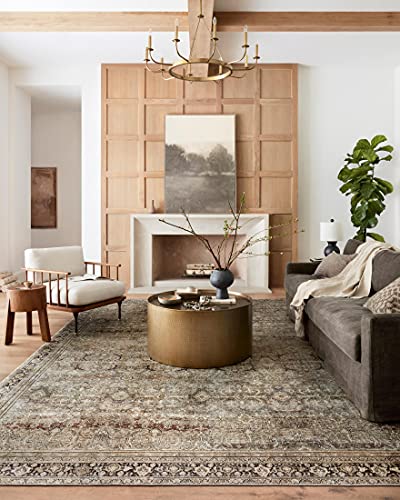
The Loloi Layla olive-and-charcoal area rug gives a basic apartment living room an older, collected look without the price of a genuine vintage rug. Its low-pile printed construction is easier to place beneath furniture and does not shed like a thick natural-fiber rug.
It is intentionally thin, so add a nonslip rug pad if the floor is slick or you want more cushioning. Also expect the colors to shift slightly with room lighting and screen settings.
Student-budget move: A rug is worth waiting for. Choose your pattern, save it, and watch for a sale instead of panic-buying the first cheap rug available during move-in week.
3. Replace the String-Light Spiderweb With One Grown-Up Floor Lamp

I am not against string lights. I am against one strand sagging from the ceiling like the apartment is permanently waiting for a birthday party to begin.
Lighting changes how every other piece of decor looks. Overhead rental fixtures tend to flatten a room, exaggerate beige walls, and make late-night studying feel vaguely like a dental appointment. A warm floor lamp creates a lower pool of light that makes the room feel calmer and more layered.

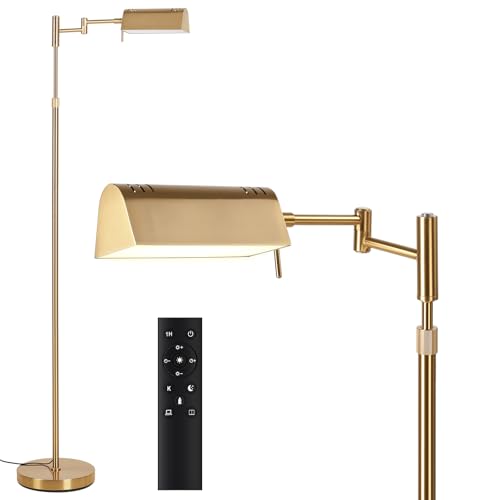
The SUNMORY dimmable antique-brass pharmacy floor lamp looks much more established than a basic plastic dorm lamp. The height, swing arm, and lamp head are adjustable, so it can light a reading chair, brighten a desk, or point upward for softer ambient light. The built-in dimmer is especially useful when the same living room has to function as a study space, movie room, and place where someone is always eating cereal.
Antique brass also adds warmth without requiring every other metal finish in the apartment to match.
This is one of the more expensive items in the list, but it replaces decorative lighting and task lighting in one footprint. It can also follow you into an office, bedroom, or future living room after college.
Student-budget move: If the exact lamp is outside the current budget, copy the formula: slim metal base, warm finish, adjustable shade, and a dimmable warm-white bulb. The lighting strategy matters more than the label.
4. Make the College Apartment Bedroom Look Like a Real Bedroom

The bedroom is where college apartment decor can accidentally slide back into dorm territory.
The easiest correction is to treat the bed like the room’s largest design element. Use a simple comforter or duvet as the base, then fold a quilt across the lower third of the bed. The extra layer adds color, texture, and a more finished silhouette without creating a mountain of decorative pillows that has to relocate every night.


The Bedsure olive-green cotton quilt set brings in a mature, earthy color while staying versatile enough to use year-round. The stitched geometric pattern creates visual interest without becoming the entire personality of the bedroom, and the set includes matching shams for an instant pulled-together layer.
Olive works particularly well with white, cream, tan, black, walnut, rust, and muted pink. That flexibility matters when the bed frame, carpet, and nightstand may not have been chosen as a coordinated family.
Let the quilt hang naturally rather than tucking every edge tightly. Add one long lumbar pillow or two sleeping pillows in front of the shams, then stop. A grown-up bed can still look soft and relaxed; it just does not need twelve pillows dressed for a board meeting.
Student-budget move: Spend on the visible top layer and keep using the sheets, insert, and basic bedding you already own. The room receives the makeover without replacing everything on the bed.
5. Hide Rental Blinds Behind Linen-Look Curtains

Few things announce “temporary rental” faster than bent vertical blinds clattering every time the air conditioning turns on.
Curtains soften the hard lines around a window, make ceilings appear taller, and help a college apartment bedroom or living room feel complete. Choose a simple solid fabric with visible texture instead of a loud pattern that controls the entire room.

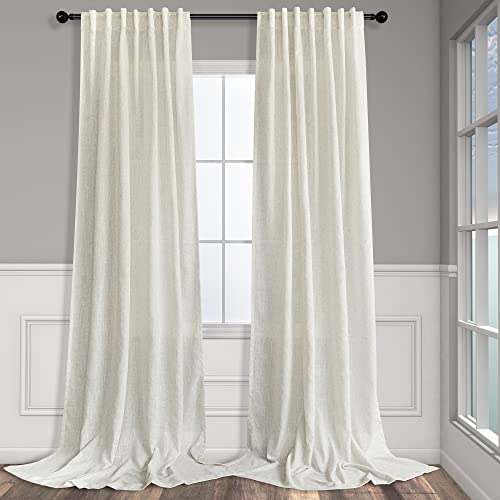
The natural linen-blend curtain panels add a relaxed, slightly tailored frame around the window while still filtering light. The natural flax tone works with warm or cool palettes and is more forgiving than bright white in a high-traffic student apartment.
If the lease allows curtain hardware, mount the rod several inches above the window and extend it beyond both sides. That placement makes a small window look larger and allows the panels to sit mostly outside the glass when open.
For stricter rentals, look for no-drill rod brackets or a tension rod that fits the window recess. Always check the lease before attaching anything, and keep the original blinds in place unless management has approved removal.
Measure from the planned rod position to the floor—not merely the window itself. Curtains that end awkwardly above the baseboard tend to make the room look shorter.
Student-budget move: One pair of textured curtains can do more for a room than six small decorative accessories. Start with the window everyone sees from the entrance.
6. Use Fewer, Larger Frames for College Apartment Wall Decor

Covering every inch of wall can make an apartment feel visually noisy, especially when the furniture and flooring already bring several different styles into the room.
Instead of scattering dozens of small prints around the apartment, create one concentrated wall moment with larger matching frames. A simple row above the sofa, a two-by-two grid beside the dining table, or three oversized pieces above the bed looks deliberate and is easier to plan.


The upsimples 11-by-14 black frame set includes five lightweight matching frames that can display 8-by-10 art with the mats or larger pieces without them. The consistent black outline gives inexpensive digital prints, personal photographs, or thrifted pages the same visual language.
Choose art that shares one connection: similar colors, the same subject, one photography style, or a common background tone. The pieces do not have to come as a prepackaged set. A mix of personal photos, abstract downloads, and local campus or city images feels far more personal than generic motivational quotes.
Use removable picture-hanging strips rated for the weight of each frame, and follow the surface-preparation instructions carefully. Lightweight covers make these frames easier to hang in a rental, but no adhesive product is completely risk-free on weak paint.
Student-budget move: The frames are the reusable purchase. Fill them with affordable printable art now and upgrade individual pieces later without rebuilding the whole wall.
7. Put a Tray on the Coffee Table and Give the Clutter a Job

Coffee-table styling becomes much easier when the decor has a boundary.
A tray turns several unrelated small objects into one composition and leaves the rest of the table open for actual life. It also gives remotes, coasters, and the mysterious collection of roommate chargers somewhere to land before they spread across every surface.


The round vintage-brown wood tray adds warmth and a more substantial finish than a flimsy plastic organizer. Its round shape also creates contrast on a square or rectangular coffee table.
Keep the arrangement simple: one practical item, one natural element, and one object with height. That might be a small lidded box for remotes, a plant or vase, and a candle. Leave enough empty space around the pieces that the tray does not look as if it is holding the contents of a junk drawer during an emergency.
Because the tray is decorative rather than food-safe, use it for display and organization—not as a serving platter. Wipe spills promptly instead of soaking the engineered-wood surface.
This same tray can move to a kitchen island, dresser, bathroom counter, or entry table later, which makes it a much better student-budget purchase than a heavily themed centerpiece.
Student-budget move: Shop your apartment before filling the tray. A stack of two books, a small thrifted vase, and the candle you already own may be all it needs.
8. Give the College Apartment Kitchen One Coordinated Countertop Moment

A college apartment kitchen rarely needs more objects sitting on the counter. It needs the objects already there to look less chaotic.
Choose one small zone near the stove and make it intentional. Put the utensils used every day inside one sturdy crock, add a wood cutting board behind it for height, and place a small bowl or salt cellar nearby. Then clear the surrounding counter.


The large white ceramic utensil holder holds a useful number of cooking tools without looking like a temporary plastic container. Its weight helps prevent tall utensils from tipping it over, while the cork base protects a rental countertop from scratches.
White ceramic works with almost any cabinet color and lets wood, black, stainless steel, or colorful utensils look intentional together. If the kitchen already has several white finishes, choose a warmer cream or stoneware version instead.
Do not put every utensil you own on display. Keep the spatulas, wooden spoons, ladle, and whisk used most often in the crock. Store duplicates and specialty tools in a drawer. The goal is to create one attractive working station—not exhibit evidence that four roommates each brought a can opener.
Student-budget move: Clearing the counter is free. Buy the holder only after deciding which tools deserve to stay visible.
9. Hide Roommate Chaos in Matching Woven Baskets

Most student apartments do not have a decor problem. They have a visible-stuff problem.
Blankets, gaming controllers, textbooks, reusable bags, shoes, and packages all make sense individually. Together, they can make a living room look unfinished no matter how pretty the rug is.


These gradient-brown woven storage baskets are large enough to handle blankets, pillows, laundry, or shared-room clutter while still reading as part of the decor. The soft cotton-rope construction is easier to move than a rigid bin and has no sharp corners to damage furniture.
Place one beside the sofa for throws, one near the entry for shoes or bags, or one in the bedroom as a hamper. If several baskets are visible from the same room, keep their material or color family consistent. They do not need to be identical, but a coordinated set makes open storage look purposeful.
Give every basket a specific job. “Random stuff” is not a category; it is how a basket quietly becomes an archaeological dig by midterms.
Because soft baskets can arrive folded, reshape them with blankets or towels inside and allow time for the creases to relax.
Student-budget move: Declutter before buying containers. Storage is useful only when it holds things you actually need, not items everyone has postponed deciding about.
10. Turn the College Apartment Bathroom Into a Mini Hotel

The bathroom may be the smallest room in the apartment, but it is often the easiest place to create a complete transformation.
A clean shower curtain with a substantial texture covers a huge vertical surface. Add matching towels, one bath mat, and clear counters, and the room can feel dramatically more finished without changing the mirror, vanity, tile, or questionable overhead light.


The Dynamene white waffle-weave shower curtain has a heavier, hotel-inspired texture that makes a basic rental bathroom feel cleaner and more intentional. The weighted hem helps it hang neatly, and the machine-washable fabric is practical for a shared college bathroom.
If bright white feels too risky for the household, use the same waffle texture in cream, tan, sage, charcoal, or another shade from the apartment palette. The grown-up effect comes from the fabric weight, consistent color, and uncluttered styling—not from white specifically.
Keep only daily essentials on the counter. Corral them on a small tray, decant cotton swabs only if someone will actually refill the container, and move backup products beneath the sink.
One final plea on behalf of peaceful roommate relations: assign towel colors. Matching bathroom decor is lovely. Accidentally sharing a towel is less so.
Student-budget move: Start with the shower curtain and a thorough reset. Add new towels only when the old ones genuinely need replacing.
How to Decorate a College Apartment Without Buying Everything at Once
The most expensive way to decorate is to rush through the entire apartment during move-in weekend.
Live in the space long enough to notice where people naturally sit, what clutter keeps appearing, which rooms feel dark, and what you actually use. Then make improvements in this order:
- Edit and organize: Remove packaging, duplicates, and anything no roommate claims.
- Choose the palette: Work with the sofa, floor, and cabinets already there.
- Fix the lighting: Add one warm lamp where the apartment feels harshest.
- Create one room anchor: Choose the rug, bedding, or curtains with the largest visual impact.
- Add wall art and smaller styling pieces: Finish only after the bigger layers are settled.
If the budget is extremely tight, begin with pillow covers, framed printable art, and a secondhand lamp. Save the rug and larger textiles for sales, gift lists, or shared roommate purchases.
For anything used in a common area, decide before buying who owns it when the lease ends. Nothing destroys the memory of a beautifully styled living room quite like a four-person custody dispute over a floor lamp.
College Apartment Decor FAQs
How do I make a college apartment look more grown-up?
Use a limited color palette, warmer layered lighting, larger wall art, textured curtains, and concealed storage. A room looks mature when the elements repeat and the clutter is controlled—not when every item is expensive.
What should I buy first for a college apartment?
Start with the item that solves the room’s biggest problem. That may be a lamp in a dark living room, curtains over unattractive blinds, baskets for visible clutter, or bedding in an empty-looking bedroom. Do not begin with tiny accessories when a large unfinished surface is setting the tone.
How can I decorate a college apartment on a very small budget?
Choose the palette for free, rearrange the furniture, remove visual clutter, print affordable art, reuse pillow inserts, and shop secondhand for lamps, wood furniture, frames, and mirrors. Spend new-product money on washable textiles and practical storage that will move with you.
What colors work best for college apartment decor?
Warm neutrals and earthy accents are flexible because they work with common rental finishes. Cream, tan, taupe, charcoal, olive, rust, brown, and muted blue can be mixed into several styles. Pick three main colors and repeat them instead of adding a new shade with every purchase.
How do I decorate a shared apartment with roommates who have different styles?
Keep shared-room foundations simple, then let each person contribute smaller personal pieces within the agreed palette. Decide together on the rug, curtains, lighting, and storage. Personal bedrooms can carry stronger individual themes without turning the living room into four separate Pinterest boards competing for custody.
Final Thoughts
The best college apartment decor does not hide the fact that students live there. It simply makes everyday student life look considered.
The apartment can still hold textbooks, takeout containers, game nights, rushed mornings, and furniture inherited from three different relatives. A cohesive palette, one good lamp, a properly sized rug, finished windows, and storage that absorbs the evidence can make all of it feel like a real home.
Start with the room you use most, fix its biggest visual problem, and stop before the budget begins making decisions it will regret.
Then enjoy the slightly surreal moment when someone walks into the apartment and asks who decorated it—as if the answer was not you, a tape measure, and several hours of refusing to buy another tiny sign.