

The Litter Box Edit: 10 Beautiful Solutions for a Cleaner, Calmer Home
Because loving a cat should not mean surrendering your floor plan, your back, or the feeling that your home is put together.
There is a particular kind of home frustration that only a cat person understands. You can style the room, clear the counters, light the candle, and fluff every pillow—and still feel as if the litter box is quietly running the house.
Sometimes it is the sight of it. Sometimes it is the grit underfoot, the smell that seems to announce itself ten minutes before company arrives, or the daily scoop waiting when you are already stretched thin.
Sometimes the problem is not yours at all. The box may be too cramped for a large cat, too high for an older one, too enclosed for a cautious one, or far too interesting to the dog.

That is why the best litter box solution is rarely the one with the prettiest product photo. It is the one that solves the right problem without creating a new one for your cat.
This is the edit we wish every cat owner could do before buying anything: identify the friction, measure the real space, notice what your cat is telling you, and choose the least complicated setup that can stay clean on an ordinary Tuesday—not only on the day you photograph it.
Affiliate disclosure: This article contains affiliate links. If you make a purchase through one of these links, Aesthetic Home Edit may earn a commission at no additional cost to you. We only share solutions we believe are genuinely useful for the problem being discussed.
Find Your Real Litter Box Problem First
Most litter box frustration lives in one or more of four layers:
- The visual layer: You see a plastic pan, scattered litter, cords, bags, or a hulking appliance where you want the room to feel calm.
- The air-and-floor layer: Odor, dust, tracking, and the small messes around the box make the whole zone feel unclean.
- The labor layer: Scooping, bending, bagging, refilling, and deep cleaning do not fit your body or your schedule.
- The cat layer: The location, entrance, interior space, noise, litter, or movement does not feel comfortable or safe to the cat who has to use it.
The fourth layer gets the final vote.
A litter box can disappear beautifully into a cabinet and still fail if your cat feels cornered. It can clean itself and still be the wrong size. It can promise odor control while holding stale air exactly where your cat’s nose goes.
The 60-Second Litter Box Fit Test
Before you scroll to the section that sounds most like your home, answer these five questions:
- Can your cat enter, turn, dig, posture, and exit without squeezing? Feline-care guidance commonly recommends a box approximately one and a half times the cat’s length from the nose to the base of the tail.
- Is the route quiet and easy? A box beside a slamming washer, behind a door that can close, or down a flight of stairs may be convenient for the room and inconvenient for the cat.
- Would another pet or cat be able to block the exit? Privacy is useful. Feeling trapped is not.
- Can you genuinely clean every surface? If a lid, cabinet, drum, or drawer is difficult to reach, “hidden” can quickly become “ignored.”
- Does the setup still work if the power, Wi-Fi, or automatic cycle does not? Convenience should always have a backup plan.
If you are changing the box style, location, or litter, keep the familiar box available while your cat investigates the new setup.
Acceptance is not a small design detail. It is the entire project.
Choose the Section That Sounds Like You
- “I hate how the litter box looks.” Start with Section 1.
- “There is nowhere to put it.” Start with Section 2.
- “I want it hidden.” Start with Section 3.
- “My home never smells fresh.” Start with Section 4.
- “I cannot keep up with several cats.” Start with Section 5.
- “My cat is too big for enclosed boxes.” Start with Section 6.
- “Automatic boxes make me nervous.” Start with Section 7.
- “Scooping and bending hurt.” Start with Section 8.
- “My dog raids the box.” Start with Section 9.
- “I want convenience without overspending.” Start with Section 10.
1. A Litter Box That Belongs in a Beautiful Home

You are not shallow for caring about how the litter box looks.
Your home is the place where your nervous system lands. When one object constantly reads as clutter—even a necessary one—it can make a finished room feel temporarily unfinished forever.
The answer is not always to disguise the box as furniture. The better question is:
What would make this litter area feel like one intentional zone?
Start with the visual noise around it.
Decant the litter into a lidded container. Give the scoop a closed home. Choose one washable mat that extends beyond the exit instead of layering several small mats together. Hide the cord safely along the wall. Leave breathing room around the unit so it looks purposefully placed instead of awkwardly wedged into the only available corner.
Then decide whether you want the litter box to blend or completely disappear.
Blending works well with a modern, softly shaped design in a quiet neutral color. Disappearing usually requires a cabinet, closet, screen, or built-in enclosure—but those solutions demand more ventilation and cleaning access than the finished photographs tend to suggest.
Match the Litter Area to the Architecture
Match the litter area to the architecture of the room rather than trying to match every accessory.
In a light, contemporary room, choose a simple silhouette and keep the surrounding floor visually clear.
In a traditional room, a furniture-style enclosure may feel more natural, provided the interior is generous and easy to wipe.
In a utility room, a thoughtfully organized open station can look more finished than a cabinet that feels improvised.
The quiet luxury is not that no one can identify the litter box. It is that nothing around it looks accidental.

Where Automation Can Help
A self-cleaning format can reduce the visual cycle of a used box waiting to be scooped. It can also consolidate the litter area, waste drawer, and monitoring system into one object.
But “sleek” only counts if the actual footprint, lid or drawer clearance, outlet location, and cleaning path work in the room.
Before buying, mark the full product dimensions on the floor with painter’s tape. Then add the space required to pull out the waste drawer and remove any washable pieces.
If the taped outline irritates you, the real object will too.
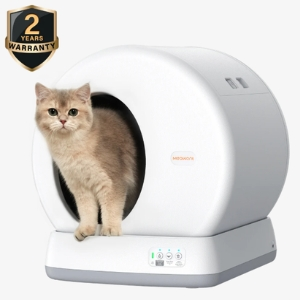
Finally, an automatic litter box that does its job without making the room feel like a utility closet.
2. Smart Litter Box Ideas for Apartments and Small Spaces

In a small home, the litter box is not hidden in a forgotten wing. It shares the air, sightlines, and square footage with your real life.
The goal is not to make it invisible at any cost. The goal is to give it a defined address that does not interrupt the room.
Begin by looking for underused edges rather than empty rooms:
- The end of a bathroom vanity
- A wide hallway turn
- The unused side of a wardrobe
- The space beside—not inside—a laundry closet
- A bathroom corner that stays consistently dry
- The end of a console or storage cabinet
Avoid any location where a door can pin the cat in, a shower can spray the box, or a washing machine can startle your cat in the middle of using it.
Vertical thinking helps with storage, but not with the cat’s toilet itself. Mount litter supplies above the zone in a closed cabinet. Hang a slim hand broom nearby. Reserve the floor for what requires stability: the box, the cat’s exit path, and one generous tracking mat.
Make the Footprint Honest
Product dimensions are only the first layer. A functional small-space setup also needs:
- A comfortable approach path
- Clearance for the waste drawer, lid, or rotating mechanism
- Room to add litter without wrestling with the unit
- Access to an outlet without an exposed extension cord
- Enough open floor to sweep around the box
- Space for a backup box during transition or maintenance
This is where many “compact” recommendations fall apart.
A litter box can have a small exterior footprint while offering a cramped interior. Another can fit perfectly into a corner but require you to drag it into the middle of the room every time it needs to be emptied.
Your usable footprint is the object plus the choreography required to live with it.

The One-Zone Apartment Formula
Anchor the station with a washable mat, store every supply within one arm’s reach, and keep the nearest visible surface intentionally quiet.
If the box is in the bathroom, resist turning the top into another cluttered shelf.
If it is in the living area, use a screen only if airflow and a clear exit remain intact.
For renters, freestanding solutions are usually better than ambitious furniture cutouts. A slim folding screen, a properly sized console enclosure, or a clean-lined self-cleaning unit can move with you when the lease ends.
The best apartment solution is reversible.
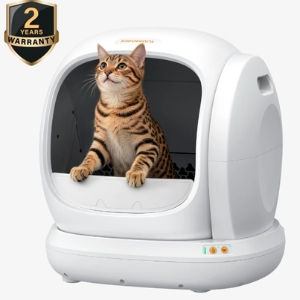
Every inch has to earn its place in a small home.
The SC02 fits a roomy 75-liter interior into a 19.3-inch-square footprint
3. How to Keep the Litter Area Stylish and Discreet

Pinterest is full of litter boxes hidden inside benches, wardrobes, sink skirts, closets, and transformed IKEA cabinets.
The before-and-after is satisfying because it gives an awkward necessity somewhere beautiful to disappear. But a hiding place is only successful when it works from the cat’s point of view and the cleaner’s point of view.
Before turning furniture into a litter box enclosure, test four things:
Space. Air. Escape. Access.
Space
Measure the usable interior after the hinges, door frames, liners, and litter box are inside.
Your cat needs room to enter, turn, dig, posture, and leave without brushing against every wall.
An enclosure can look enormous from the outside while becoming surprisingly cramped once the actual litter box is placed inside.
Air
A cabinet can keep the box out of sight while concentrating odor inside.
Include ventilation openings that cannot be blocked by the wall, furniture, storage bins, or decorative objects. Clean the hidden interior as deliberately as you clean the litter box itself.
If opening the cabinet releases a wall of trapped odor, the setup is not controlling the smell. It is storing it.
Escape
If a dog or another cat approaches the only opening, can your cat leave without squeezing past them?
In tense multi-pet homes, a second opening or a more open location may matter more than complete concealment.
The prettiest hiding place in the room is not a success if your cat feels vulnerable using it.
Access
Can you open the enclosure fully? Can you remove the litter box without tipping it? Can you reach the back corners? Can you wipe away urine overspray?
If cleaning requires a screwdriver, a flashlight, and a yoga pose you have not attempted since 2017, it is probably not going to remain a beautiful solution.

Three Levels of Concealment
- Styled, not hidden: A visually quiet litter box, matching supply storage, and one substantial mat. This option is best for airflow, observation, and easy cleaning.
- Softly screened: A partial furniture panel or folding screen that interrupts the sightline without enclosing the cat. This is especially useful for renters and cautious cats.
- Fully enclosed: A cabinet, closet, or purpose-built litter box hider. Choose this only when the interior, ventilation, access, and exit are genuinely generous.
If what you truly want to hide is not the box but the evidence of use, an automatic option may solve more than a cabinet.
Waste moves into a closed drawer, the litter surface resets more quickly, and the area can remain composed without placing the entire setup inside another piece of furniture.
The Discreet-Home Test
Stand at the room’s main entrance.
If your eye immediately goes to the litter area, remove the surrounding visual clutter before purchasing a larger piece of furniture.
The scoop, open litter bag, curling mat, scattered litter, cords, and storage containers may be causing more visual disruption than the box itself.
If you want the litter area to fade into the room instead of becoming its focal point, the SC02 creates one clean, composed station.
4. The Easier Way to Keep Your Home Feeling Fresh

The most effective odor strategy is not perfume.
It is shortening the amount of time waste remains exposed, choosing materials you can genuinely wash, and preventing stale air from settling into a neglected corner.
Fragrance can make a room smell like fragrance and litter. It may also be too intense for a cat’s sensitive nose.
Begin with source control:
- Remove clumps and solids promptly
- Maintain the correct litter depth
- Wipe the entrance and exit area
- Wash the mat regularly
- Deep-clean the box on a realistic schedule
- Keep waste in a sealed destination
A covered box or cabinet may reduce what you smell from across the room while making the interior less pleasant for the cat.
That does not mean every covered box is wrong. It means the real test happens at cat height.
Open the enclosure before cleaning. If the trapped air is strong, the ventilation and cleaning frequency need attention.
The Fresh-Home System
- Fast removal: Scoop at least daily, or use a reliable cleaning cycle that begins only after the cat has safely left.
- A sealed destination: Waste belongs in a closed drawer, lidded pail, or sealed bag—not in an open bin beside the box.
- Washable boundaries: A nonporous floor protector and washable mat prevent small misses from becoming permanent room odor.
- Airflow without drama: Gentle room ventilation is more useful than placing the box directly in a draft or beside a loud exhaust fan.
- A scheduled reset: Automatic does not mean maintenance-free. Empty, wipe, inspect, and periodically disassemble washable parts according to the manufacturer’s instructions.
What Self-Cleaning Changes—and What It Does Not
Automation can remove waste sooner and contain it out of sight, which may dramatically improve the everyday experience.
It does not make waste vanish.
Drawer capacity changes depending on the number of cats and how frequently they use the box. Seals and deodorizers still need attention. Residue can collect in seams. Litter can gather beneath moving pieces.
The best design is one you can open, understand, and clean completely.
Be cautious with exact “days without emptying” promises. Treat them as estimates under particular conditions, not calendar guarantees.
Your household, the drawer, your nose, and your cat determine the real schedule.

One Important Health Note
A sudden change in litter box frequency, urine volume, stool, straining, or avoidance is a health signal—not an odor-control problem.
Contact your veterinarian rather than relying on an app, a different litter, or a new box to solve an unexplained behavioral change.
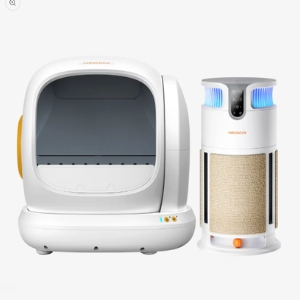
This is the whole-room answer for homes tired of covering litter odor with another fragrance.
5. A Saner Litter Routine for Busy Multi-Cat Homes

Two cats do not always create twice the litter work.
Some weeks, they create what feels like five times the monitoring.
Who used which box? Is one cat guarding the hallway? Why is the “clean” box suddenly the only acceptable one? When did that waste drawer fill so quickly?
The most important multi-cat truth is that convenience for the human does not erase the cat’s need for choice.
Feline behavior guidance commonly recommends one litter box per cat, plus one additional box, placed in separate locations rather than lined up together as one large bathroom station.
To a cat, three boxes positioned shoulder-to-shoulder can function like one resource—especially if another cat controls the route.
An automatic box can reduce the labor attached to one or more stations. It should not become a reason to remove every alternative overnight.
Build a Litter Network, Not a Litter Corner
Map the home through each cat’s eyes.
A confident cat may cross the living room without hesitation. A timid cat may avoid a route that passes the dog’s bed, the vacuum closet, or another cat’s favorite perch.
Whenever possible, give important resources more than one approach and a clear exit.
For each litter box, record:
- Its location and escape path
- The interior size and entrance height
- The litter type and depth
- Which cat appears to prefer it
- How quickly it becomes soiled
- Which cleaning step tends to get delayed
This small audit tells you where automation would create the most relief.
It may belong at the highest-volume station while a simple open backup remains in a quieter area.

Be Skeptical of Perfect App Data
Weight and visit tracking can be useful for noticing patterns, but several cats of a similar size can confuse identification.
Shared visits also do not always tell the complete story.
Use app data as a prompt to observe—not as a diagnosis or a substitute for seeing what is happening inside the box.
Choose waste capacity based on the busiest realistic day, not the calmest marketing scenario. Make sure replacement bags, filters, litter, and other supplies are easy to reorder.
In a multi-cat household, one small recurring inconvenience can become a complete system failure surprisingly quickly.
The right setup gives each cat options while giving you fewer repetitive steps.
Both outcomes matter.
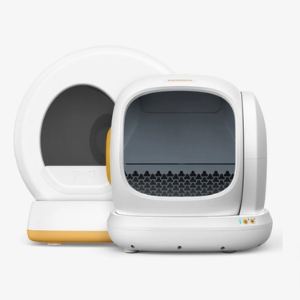
One busy household, two distinct litter stations—and far fewer repetitive scoops.
6. Roomier Litter Box Solutions for Bigger Cats

“Fits cats up to ___ pounds” is one of the least useful measurements in the litter box aisle.
Weight does not tell you torso length, height, turning radius, posture, or whether a fluffy tail will brush against a closing wall.
For a bigger cat, begin with the body—not the product label.
Measure from the nose to the base of the tail while your cat is standing naturally. Use the one-and-a-half-times guideline as a reality check for the usable interior length.
Then watch how your cat uses the current box.
Does your cat keep the front paws outside? Turn in tiny steps? Crouch lower than seems natural? Step directly backward instead of turning around?
Those are fit clues.
Outer Size Is Not Interior Space
Automatic litter boxes can look enormous while devoting much of their footprint to the motor, drum, waste drawer, or exterior housing.
Ask for the measurements that matter:
- Usable interior floor or drum space
- Entrance width and height
- Height of the step-in lip
- Open versus enclosed movement path
- Maximum operating weight
- Minimum detection weight
- Whether long fur affects cleaning
- Whether a high urination posture creates additional cleaning needs
An open-top design may feel more forgiving because the cat has visual space above and a direct way out.
It may also scatter more litter, so pair it with a generous mat and position the entrance away from the room’s main traffic line.

Let Behavior Overrule the Specification Sheet
A large cat using an undersized box is not proof that the box is comfortable.
Cats often tolerate imperfect resources until they suddenly do not.
Place the new option and the familiar box side by side during the transition. Watch for relaxed digging, natural turning, comfortable posture, and normal covering—not simply successful elimination.
If no automatic model offers enough usable space for your cat, a large conventional open pan combined with a simpler waste-disposal system may be the more thoughtful choice.
There is no design win in automating a box your cat has to fold themselves into.
The Big-Cat Fit Check
Tape the interior dimensions on the floor, not only the outside footprint.
Place a familiar mat or shallow tray inside the outline and observe whether the turning space looks honest.
Your cat’s actual body should make the decision—not the XL label on the product page.
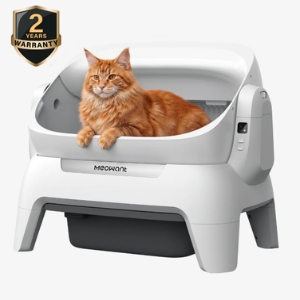
Big cats need honest turning room—not another optimistic XL label.
7. What Safety-Conscious Cat Owners Should Look For

If a machine is going to move around your cat, “smart” is not enough.
You deserve to understand exactly what makes it stop.
Begin by separating safety language from safety behavior.
“Multiple sensors” sounds reassuring, but the meaningful questions are where those sensors are located, what they detect, what happens when one is blocked or dirty, and whether the unit stops if a cat approaches during a cleaning cycle.
Ask These Questions Before Bringing Any Automatic Box Home
- What is the minimum cat weight for automatic mode? Very small kittens may not reliably trigger weight-based detection. Follow the manufacturer’s kitten guidance and use manual cleaning until the cat meets the stated threshold.
- Does it detect presence at the entrance as well as weight inside? A curious paw or head should interrupt movement—not only a fully entered cat.
- Is the exit open throughout the cleaning cycle? Designs that preserve a clear escape path may offer visible reassurance, particularly for cautious owners and cats.
- What happens after a power interruption or jam? Look for a safe stopped state, clear error alerts, and an easy manual release or override.
- Can scheduled or automatic cycles be disabled? Manual mode is useful during the transition, for kittens, and while troubleshooting.
- Can the sensors be inspected and cleaned? Litter dust on a sensor is not an abstract possibility. It is ordinary life.

Self-cleaning litter boxes typically use a delay after the cat leaves and sensors intended to prevent a cleaning cycle while the cat is present.
Still, no mechanism earns blind trust.
During the first few weeks, run cleaning cycles only while you are nearby. Watch the complete motion. Test the stopping behavior exactly as the manufacturer instructs—never with your cat inside.
Inspect the unit whenever it sounds different, reports an error, or behaves unexpectedly.
Your Cat’s Emotional Safety Counts Too
Noise, movement, a covered interior, or a changing floor can make a cautious cat avoid the litter box.
Introduce the new unit while it is powered off. Use familiar litter if it is compatible. Reward calm investigation without placing your cat inside.
Only begin cleaning cycles after the new box is being used consistently. Keep a conventional litter box available throughout the transition.
Automation should reduce your worry, not ask you to suppress it.
Choose a design you can see into, stop, clean, and understand.
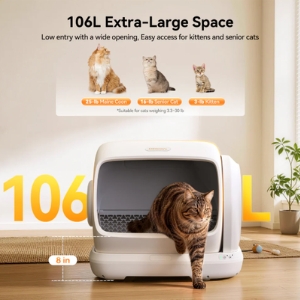
The SC09 is for cat owners who want to understand what stands between their cat and a moving machine.
8. A More Comfortable Litter Routine With Less Bending

“Just scoop every day” is simple advice until arthritis, pregnancy, surgery, chronic pain, fatigue, disability, or a demanding caregiving schedule makes the floor feel very far away.
An easier litter setup should protect two bodies: yours and your cat’s.
For yourself, count the movements—not only the scoops.
How low do you have to bend? How far do you carry the waste? Do you have to twist to pull out a drawer? Can you lift the unit when it needs to be deep-cleaned? Are replacement bags and litter stored at a reachable height?
A product that scoops automatically can still be difficult to maintain if its waste drawer is low, stiff, heavy, or awkward to line.
For an older or mobility-limited cat, prioritize:
- A low entrance
- A stable, nonslip approach
- Generous turning space
- A location that does not require stairs
- Easy access at all hours
- A clear exit that cannot be blocked
Feline-care resources specifically recommend low-sided, accessible boxes for cats with arthritis or limited mobility.

Design the Whole Movement Path
- Store bags, wipes, and the scoop between waist and shoulder height.
- Use smaller litter containers you can safely lift instead of one oversized bin.
- Place a lidded waste pail nearby so waste does not need to be carried through the home.
- Choose a mat that lies flat and does not create a trip edge.
- Leave room to approach the waste drawer from the front. A tight side pull can be harder than it initially appears.
- When possible, position the waste drawer so it opens toward your dominant hand.
What Automation Is Genuinely Good At
Automation can remove dozens of repetitive scoops from the month and keep the usable litter surface cleaner between visits.
It cannot eliminate refilling, wiping, bag changes, sensor cleaning, or periodic disassembly.
Ask to see the complete deep-cleaning process before purchasing.
If the demonstration makes you think, “I cannot safely lift, rotate, or wash that,” believe yourself.
The best accessibility feature is not a long list of app controls. It is a routine you can complete without pain, rushing, or asking your body to negotiate a badly positioned object.
When bending makes one scoop feel like one scoop too many, the SC01 can remove much of that repetitive daily cleanup.
9. How to Keep Curious Dogs Away From the Litter Box

The dog does not consider the litter box a design problem.
The dog considers it an opportunity.
The most reliable dog-proofing strategy is usually a route, not a special litter box.
Create access the cat can use comfortably and the dog cannot.
A pressure-mounted gate with a cat opening, a door latch that leaves a cat-sized gap, or a cat-only room may be more effective than asking an enclosed litter box to do all the work.
But the barrier must not turn the cat’s bathroom into a trap.
If the dog waits at the gate, blocks the opening, or rushes the cat as they exit, the setup is not cat-safe simply because the dog cannot reach the waste.
Build the Barrier in Layers
- Choose a calm location. Avoid a narrow dead-end where the cat has to pass the dog nose-to-nose.
- Give the cat visual warning. A clear sightline allows the cat to check the route before emerging.
- Create more than one safe resource when needed. In a tense household, one dog-proof station may not be enough.
- Secure waste quickly. A self-cleaning box with a properly closed drawer can reduce the amount of time waste remains available, but it is not a substitute for a physical dog barrier.
- Train the dog while redesigning the room. Management prevents access. A reliable “leave it” command supports the system.

Baby gates and other controlled barriers are commonly used when introducing cats and dogs because they create separation without eliminating all sight and scent.
Choose a design appropriate for your animals. A low gate means very little to an athletic dog, while a high jump-over gate is not kind to an older or mobility-limited cat.
Avoid the Top-Entry Shortcut for the Wrong Cat
Top-entry litter boxes can deter some dogs, but the climb may be difficult for kittens, large cats, and cats with joint or mobility limitations.
If the human problem is the dog, do not make the cat pay for it with a more difficult entrance.
The Dog-Proof Test
Watch one complete litter box visit while the dog is loose in the home.
Where does the dog first notice what is happening? Where does the cat hesitate?
Those two moments reveal where the barrier actually belongs.
The less time waste remains exposed, the fewer opportunities a curious dog has to discover it.
10. Everyday Convenience Without the Luxury Price Tag

Value is not the lowest number on the product page.
It is the complete cost of buying, living with, cleaning, supplying, and possibly returning the object—minus the real frustration it removes from your life.
A premium-looking automatic litter box can be worthwhile if it reliably reduces a task you dislike, fits your cat, and uses supplies you can easily replace.
A bargain can become expensive when it requires proprietary litter, frequent filters, special liners, difficult-to-find parts, or return shipping that rivals the original price difference.
Price the Routine, Not Only the Machine
Before buying, calculate:
- The upfront price after any current promotion
- Compatible litter and whether you already use it
- Liners, bags, filters, or deodorizers required each month
- Replacement parts and whether they are sold separately
- Warranty length and what it covers
- The return window
- Original-packaging requirements
- Who is responsible for return shipping
- The physical effort saved during a typical week
- The cleaning tools and storage space the unit still requires
Then ask the honest question:
Which cost annoys me more—the dollars or the daily task?
There is no universally correct answer.
It changes for a busy family, a person with limited mobility, a multi-cat household, and someone who finds scooping simple but cannot stand the visual clutter.

Do Not Buy the Discount Before You Buy the Fit
Sales create urgency around the least reversible part of the decision.
Slow the process down.
Confirm your cat’s size, the entrance height, litter compatibility, safety modes, complete footprint, and deep-cleaning process first. Then compare the current offer.
Return policies and promotions can change. Read the terms at checkout and keep the shipping box until the transition period is complete.
A “30-day return” is not necessarily a free return when the customer is responsible for large-package shipping.
Our Definition of an Attainable Upgrade
An attainable upgrade should solve at least two persistent problems—such as scooping plus odor or bending plus monitoring—without compromising the cat’s fit.
It should not require a new subscription to feel functional.
It should also leave enough room in the budget for the unglamorous essentials: suitable litter, a backup box, washable mats, replacement bags, and veterinary care.
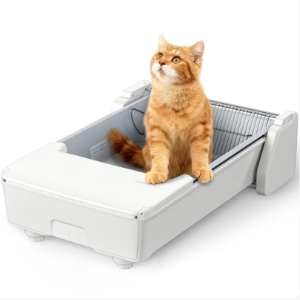
The SC03 is the budget-friendlier bridge between a familiar open litter pan and full automation.
Before You Buy: The No-Regrets Checklist
Save this list and use it for any automatic or furniture-style litter box solution, regardless of brand. Check my Amazon idea list for more litter box ideas.
Fit for the Cat
- Measure from the nose to the base of the tail.
- Compare that measurement with the usable interior, not only the exterior shell.
- Check the entrance width, height, and step-in height.
- Observe whether your cat prefers open or covered boxes.
- Confirm the minimum detection weight for kittens and very small cats.
- Keep a familiar backup box available during the transition.
Fit for the Home
- Mark the footprint on the floor with painter’s tape.
- Add clearance for drawers, lids, moving parts, filters, and removal for cleaning.
- Confirm a safe outlet location and cord route.
- Protect the floor with a flat, washable surface.
- Avoid noisy appliances, closing doors, food and water, and easily blocked exits.
Fit for Your Routine
- Watch the complete deep-cleaning process before purchasing.
- Confirm compatible litter. “Clumping” does not necessarily mean every clumping litter.
- Calculate the cost of bags, liners, filters, and deodorizers.
- Estimate how frequently the drawer will fill in your household.
- Check whether washable pieces will fit inside your sink or bathtub.
- Find out how long the pieces must dry before the box can be used again.
Fit for Your Risk Tolerance
- Understand what each sensor detects and how a cleaning cycle stops.
- Confirm manual mode, child or pet lock, error alerts, and power-loss behavior.
- Read the warranty exclusions.
- Read the return policy at checkout, including shipping responsibility and packaging requirements.
- Keep the order records, serial number, and original packaging during the trial period.
The Gentle Transition Plan
The fastest way to make a new litter box fail is to make it the only choice before your cat has accepted it.
- Place the new box near the familiar one while it is powered off. Add a small amount of familiar used litter so the new box smells recognizable.
- Let curiosity do the work. Do not put your cat inside or repeatedly carry them to the entrance.
- Limit the number of changes. If the new box accepts your current litter, change the box first and the litter later.
- Wait for consistent use. Only then should you begin a manual cleaning cycle while your cat is elsewhere.
- Introduce sound and movement gradually. Select a longer delay or manual schedule during the first stage of the transition.
- Keep the old box clean and available. Remove it only after the new routine has remained stable. Restore it immediately if you notice hesitation, accidents, or stress.
- Call your veterinarian when litter box behavior changes suddenly. Avoidance, straining, frequent tiny visits, or a change in output may reflect illness rather than preference.
Choose a quiet, consistently accessible edge of the home with airflow, a clear approach, and enough room to clean around the box.
Bathrooms can work if the floor remains dry and the door is never accidentally closed.
Avoid placing the litter box beside food, a loud washing machine, a slamming door, or in a narrow route another animal can block.
Prioritize fast waste removal, a washable interior, and ventilation.
A cabinet should have sufficient air openings, generous interior space, and complete cleaning access.
If an enclosure traps a strong odor when opened, increase the cleaning frequency and ventilation rather than trying to cover the smell with fragrance.
Designs vary, so look beyond the advertised number of sensors.
Confirm the minimum cat weight, entrance detection, stopping behavior, manual mode, error alerts, and whether the exit remains unobstructed.
Introduce the box while it is powered off, supervise the first cleaning cycles, follow the manufacturer’s instructions, and never use automatic mode for a kitten below the stated minimum weight.
Possibly, but the advertised weight capacity is not enough information.
Compare the usable interior and entrance with your cat’s body length and natural turning style.
An open-top design may provide a more comfortable movement path. If your cat cannot turn, dig, posture, and exit naturally, choose a larger conventional box instead.
Feline behavior guidelines commonly recommend one box per cat plus one additional box, distributed throughout separate locations.
An automatic box may reduce the cleaning labor, but it does not automatically replace the need for multiple safe and accessible resources.
It may shorten the amount of time waste remains exposed and store it inside a closed drawer, but a physical barrier should remain your primary dog-proofing strategy.
A cat-access gate, door latch, or separate room is usually more reliable. Make sure the dog cannot guard the entrance or exit.
It depends on the cleaning mechanism.
Many automatic boxes use clumping litter, but particle size, weight, dust, and plant-based formulas can affect the sifting process.
Use only litter the manufacturer identifies as compatible. The wrong type may cause poor cleaning, residue, inaccurate weight readings, or jams.
They can eliminate most routine hand-scooping, but they do not eliminate bag changes, refilling, wiping, sensor care, or deep cleaning.
Think “less repetitive labor,” not “maintenance-free.”
The Edit, in One Sentence
The most beautiful litter box solution is the one your cat can use with confidence and you can maintain without resentment.
Start with the friction that follows you through the day.
Solve the sightline if the room feels messy. Solve access if your body hurts. Solve space if your cat feels cramped. Solve the escape route if another pet is involved.
Use automation where it removes a genuine burden—not where it only adds a new object and another app.
When the fit is right, the litter box stops feeling like the thing you are always hiding, apologizing for, or catching up with.
It becomes what every good home system should be:
Quiet, reliable, and almost forgettable.