

Apartment Kitchen Layout Ideas That Feel Calm, Cozy, and Intentional
Making your kitchen a peaceful and welcoming place is key.
It should be a spot where you enjoy cooking and share meals with loved ones.
You want it to feel calm and cozy, and to reflect your personal style.
To get this right, you need to plan carefully and choose the right design.
Adding elements that bring relaxation and warmth can turn your kitchen into a cozy retreat.
It will show off your unique taste.
Key Takeaways
- Create a calm atmosphere with soothing colors and lighting
- Incorporate cozy elements, such as textiles and natural materials
- Design an intentional space that promotes flow and functionality
- Use plants and greenery to add warmth and character
- Consider your personal style and preferences when designing your kitchen
Creating a Functional Foundation for Your Apartment Kitchen
To make a kitchen that looks good and works well, start with a solid base.
This means planning carefully and thinking about important factors.
These factors will affect how your kitchen works every day.
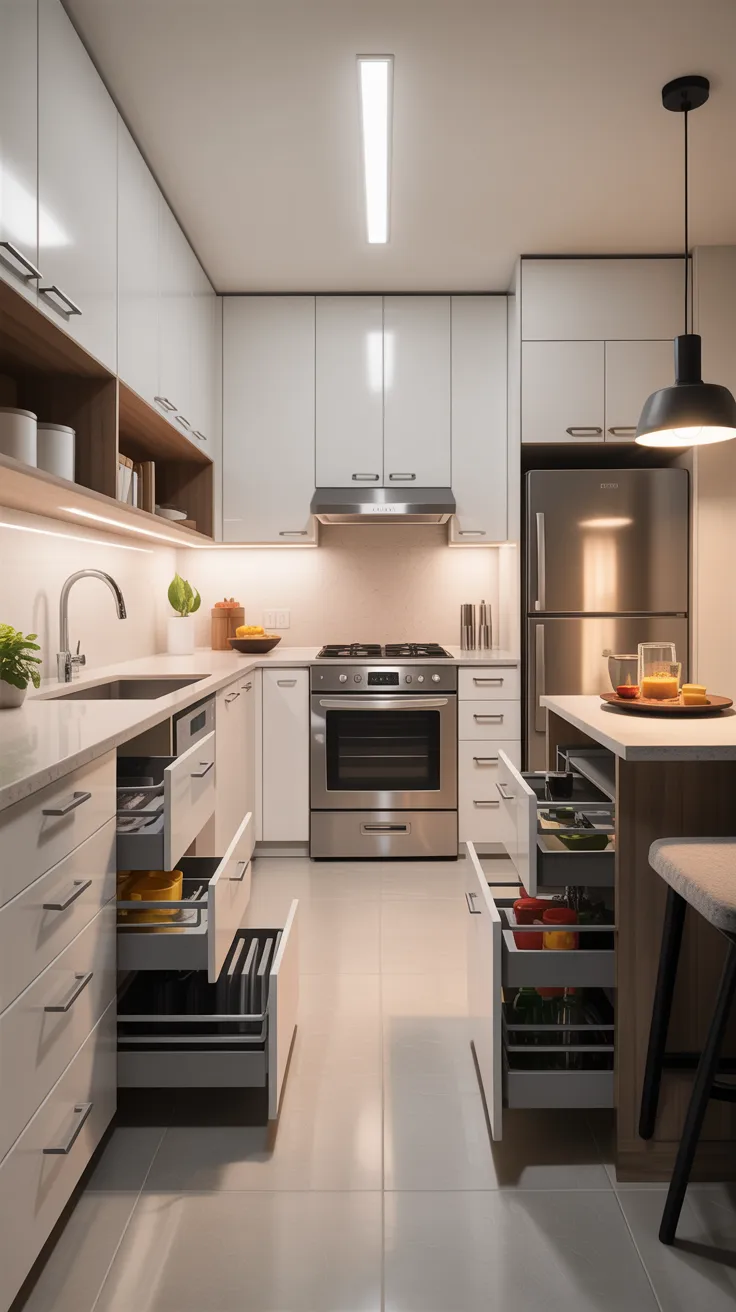
Space Assessment and Planning
First, measure your kitchen to know its size and layout.
Note where doors, windows, and important fixtures are.
This helps you plan a layout that uses your space well and meets your needs.
You might want to use a kitchen layout planner or get help from a pro.

Traffic Flow Considerations
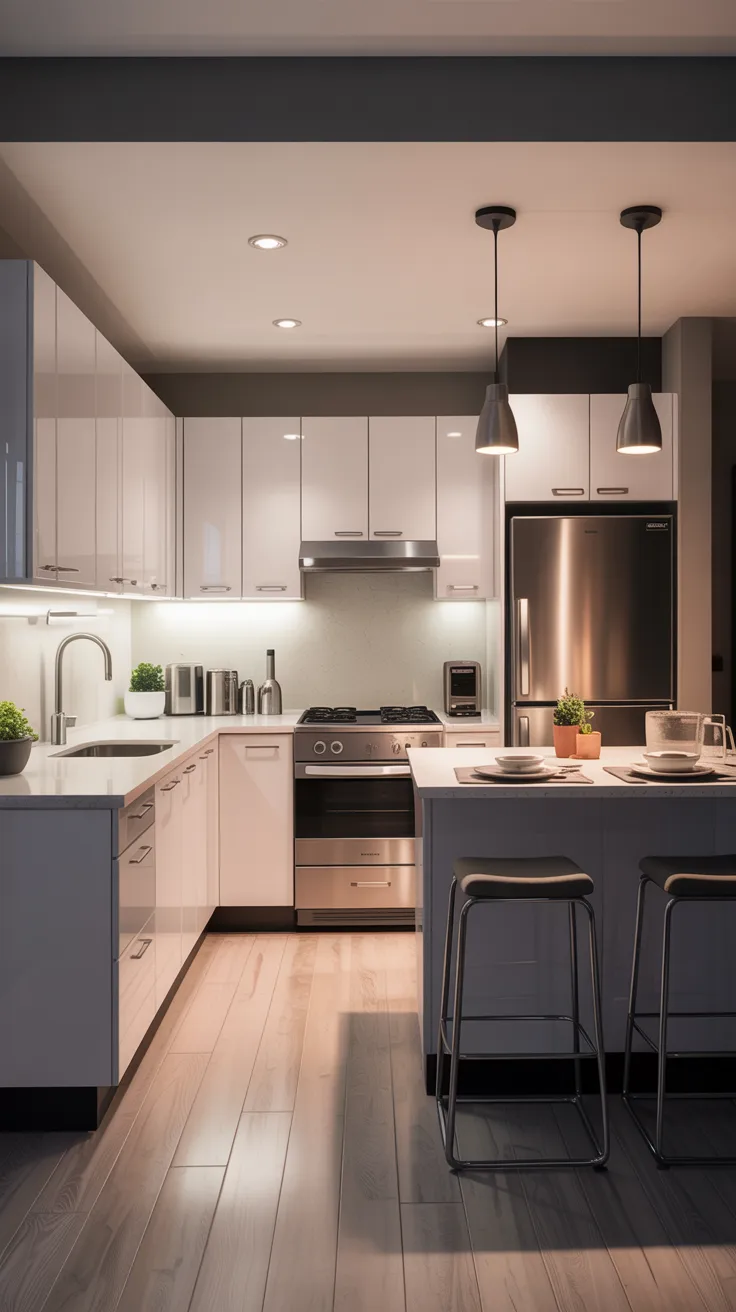
A good kitchen should let you move easily around.
Think about the “work triangle” idea, which connects the sink, stove, and fridge for better flow.
Make sure your kitchen layout doesn’t block your way.
Balancing Form and Function
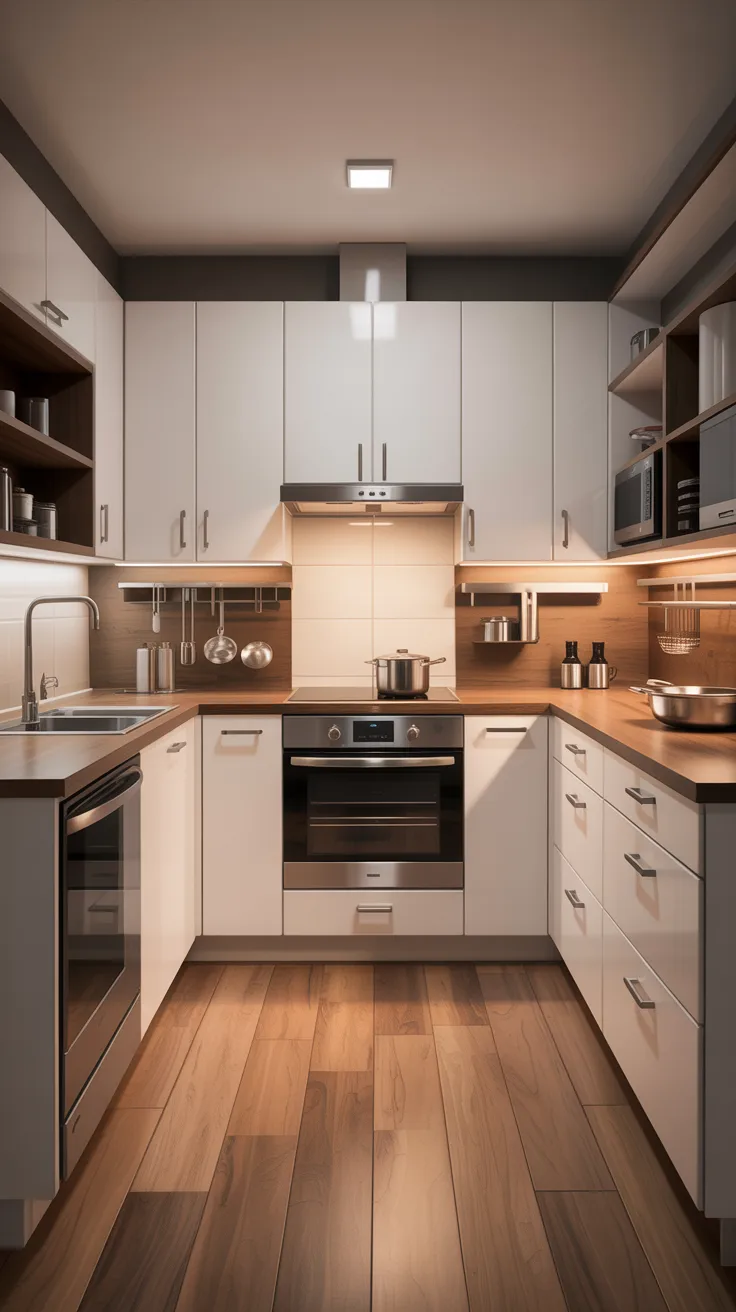
Your kitchen should look good and work well. Mix stylish things like modern appliances with practical needs like storage.
For example, add pretty touches while keeping enough counter space and storage for your stuff. This way, you’ll have an aesthetic kitchen that’s also easy to use.
Getting a kitchen right is about finding a balance between looks and use. This makes your kitchen not just pretty but also a pleasure to cook in.
The Psychology of Calm Kitchen Spaces
Creating a serene kitchen is more than just a design choice. It’s about making a space that relaxes and uplifts you. Think about how your design choices affect your mood.

Color Psychology for Tranquil Environments
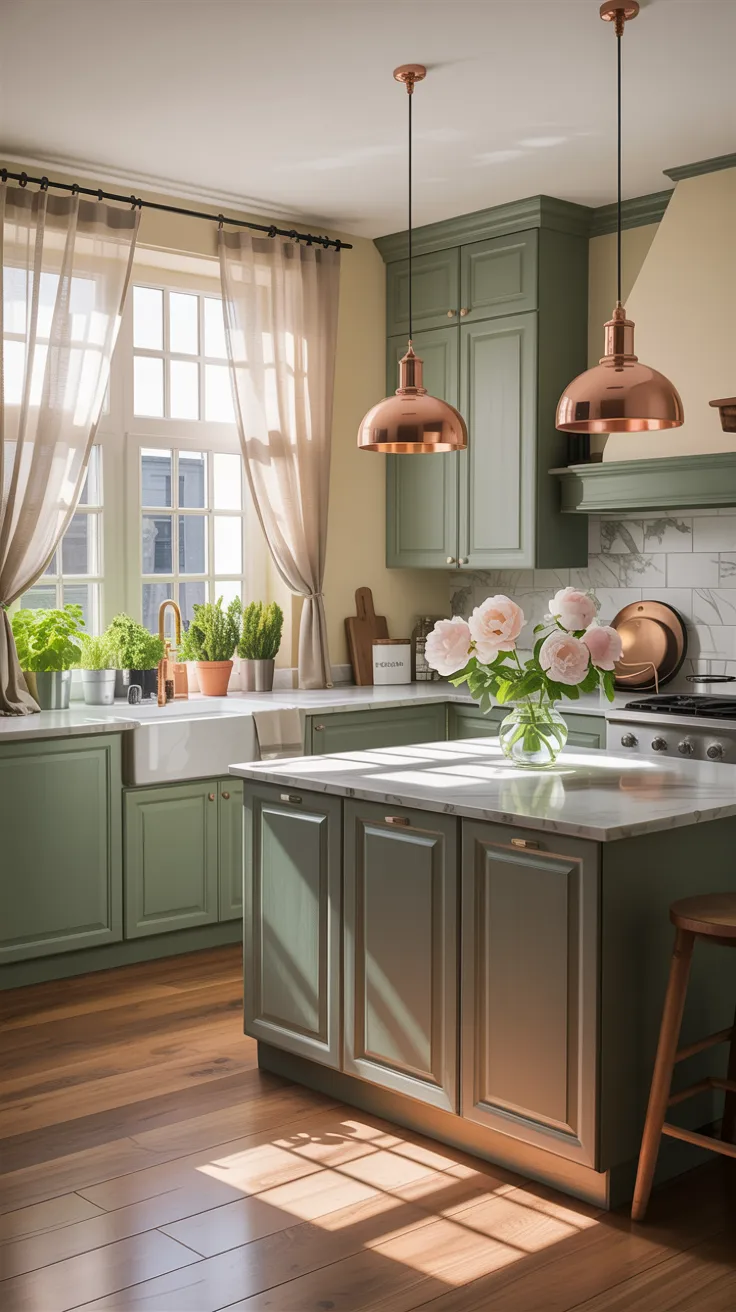
Colors set the mood in your kitchen. Soft whites, gentle blues, and muted greens are calming.
These colors are popular in designs for their peaceful vibe. Use them for walls, cabinets, or backsplashes to bring calm.
Minimizing Visual Clutter
Clutter can make your kitchen feel chaotic. To keep it calm, reduce clutter. Use closed storage, choose simple appliances, and clear countertops.
Creating Breathing Room in Small Spaces
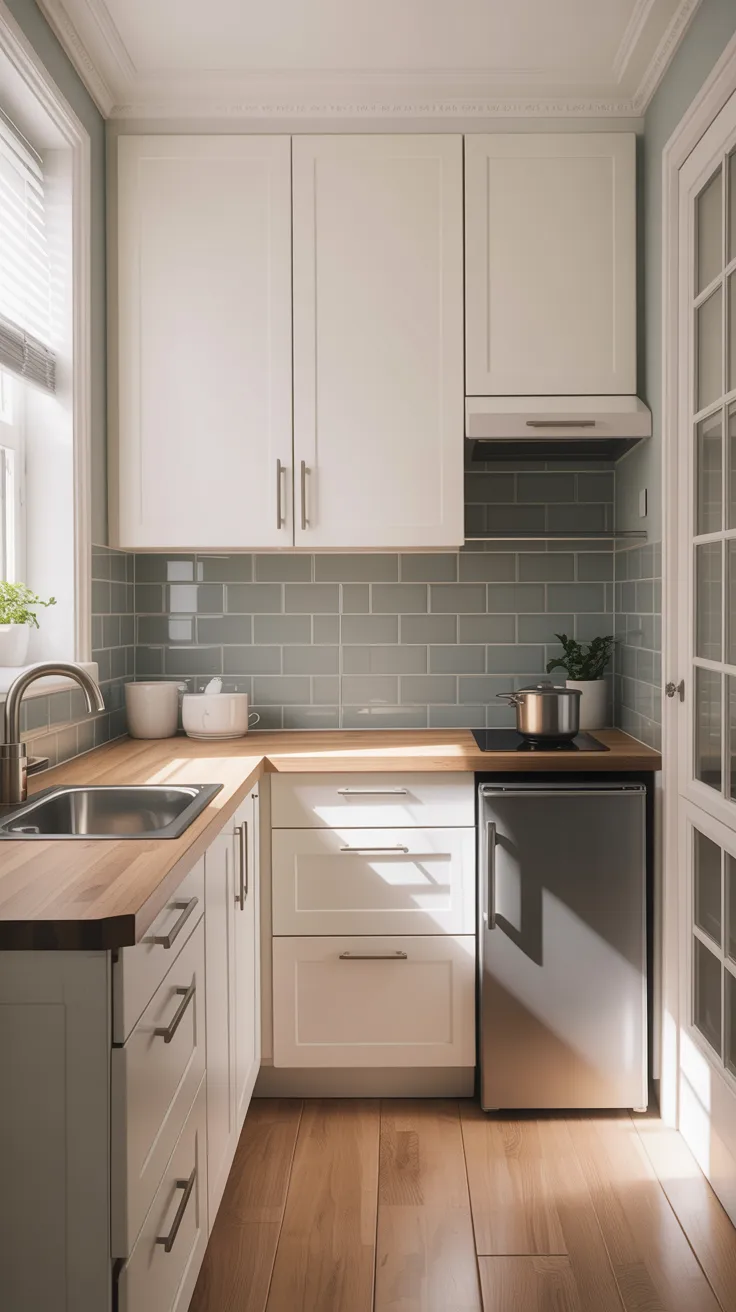
Even small kitchens can feel spacious. Use light colors on walls and cabinets to expand the area. Add mirrors or reflective surfaces to make it feel open.
Also, pick multi-functional furniture and compact appliances to save space.
By understanding the psychology of calm kitchen spaces, you can make your kitchen a peaceful retreat. It will nourish your body and soul.
Top Kitchen Ideas for Maximizing Apartment Spaces

Your modern kitchen can be both functional and beautiful, even in a small apartment. To maximize space, focus on clever storage and multi-functional design elements.
Vertical Storage Solutions
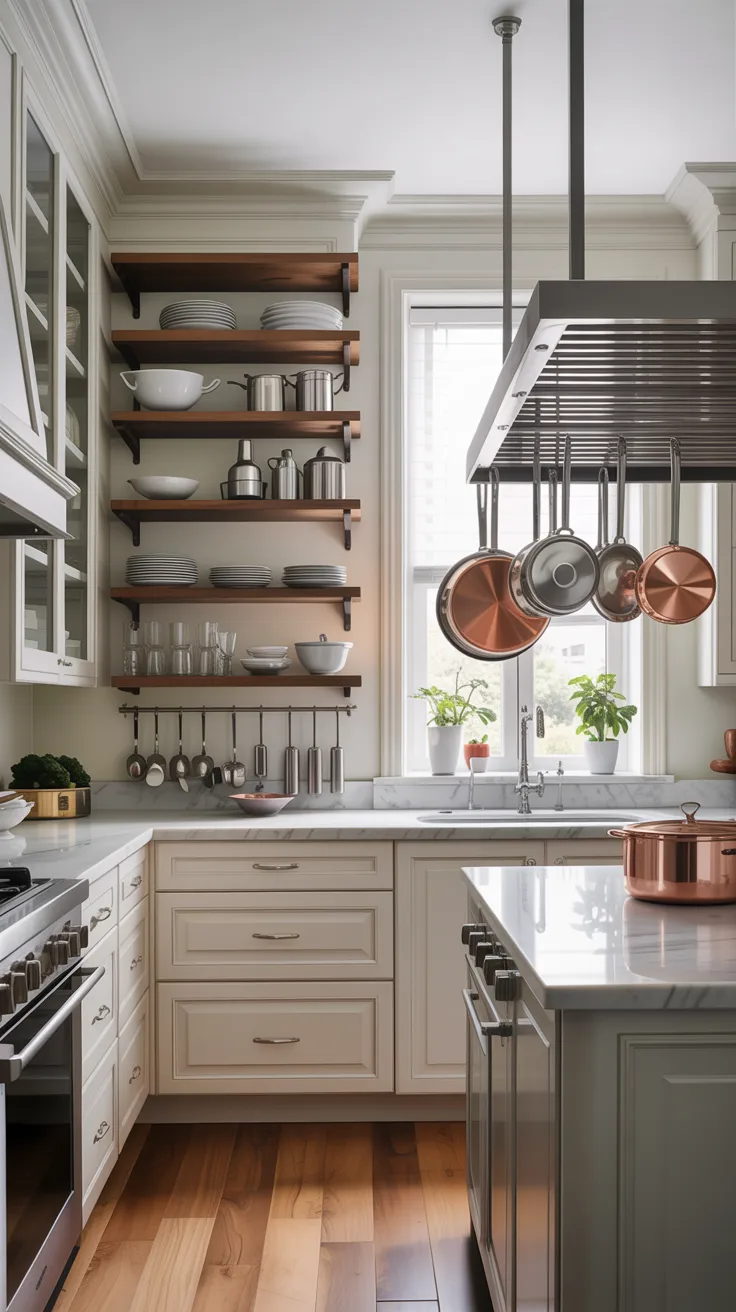
Using vertical storage is a great way to make the most of your kitchen. Install wall-mounted shelves, hanging pot racks, or tall, narrow cabinets that reach the ceiling.
This keeps your countertops clear and uses your kitchen’s vertical space well.
Benefits of Vertical Storage: It increases storage and makes your kitchen look bigger by drawing the eye upwards.
Multi-Purpose Workstations
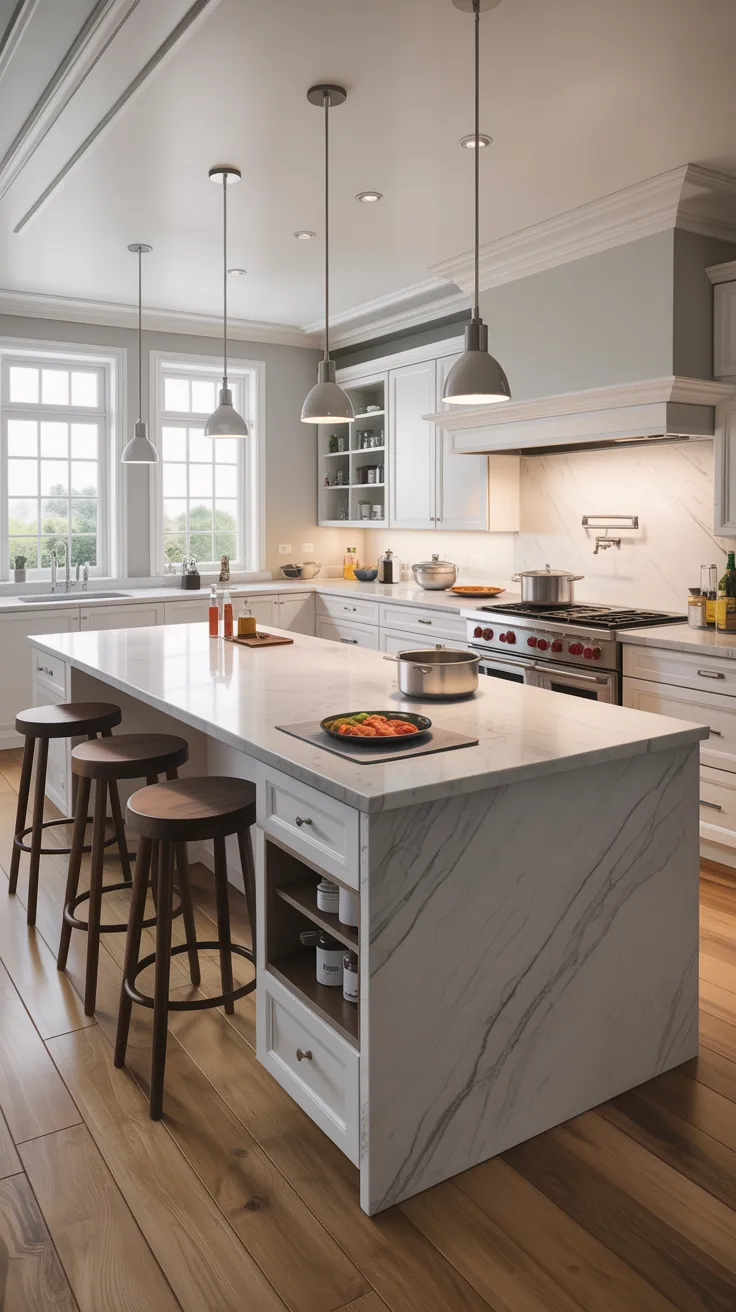
Adding multi-purpose workstations is another smart move.
Think about a kitchen island that’s both a food prep area and a dining table. Or a pot filler faucet that cuts down on clutter around your main sink.
These workstations do more than one thing, saving space by reducing the need for separate units.
Hidden Storage Opportunities
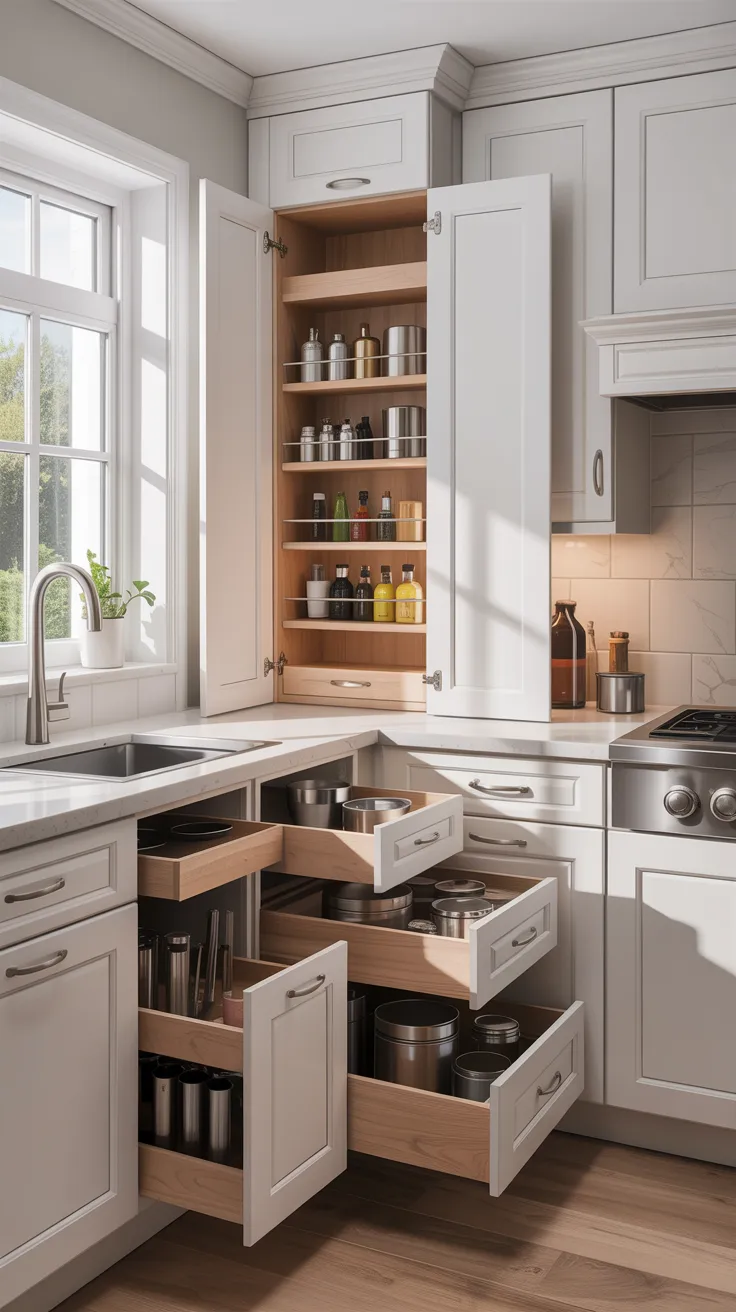
Hidden storage is a clever way to keep your kitchen tidy. You can use:
Pull-out Pantries
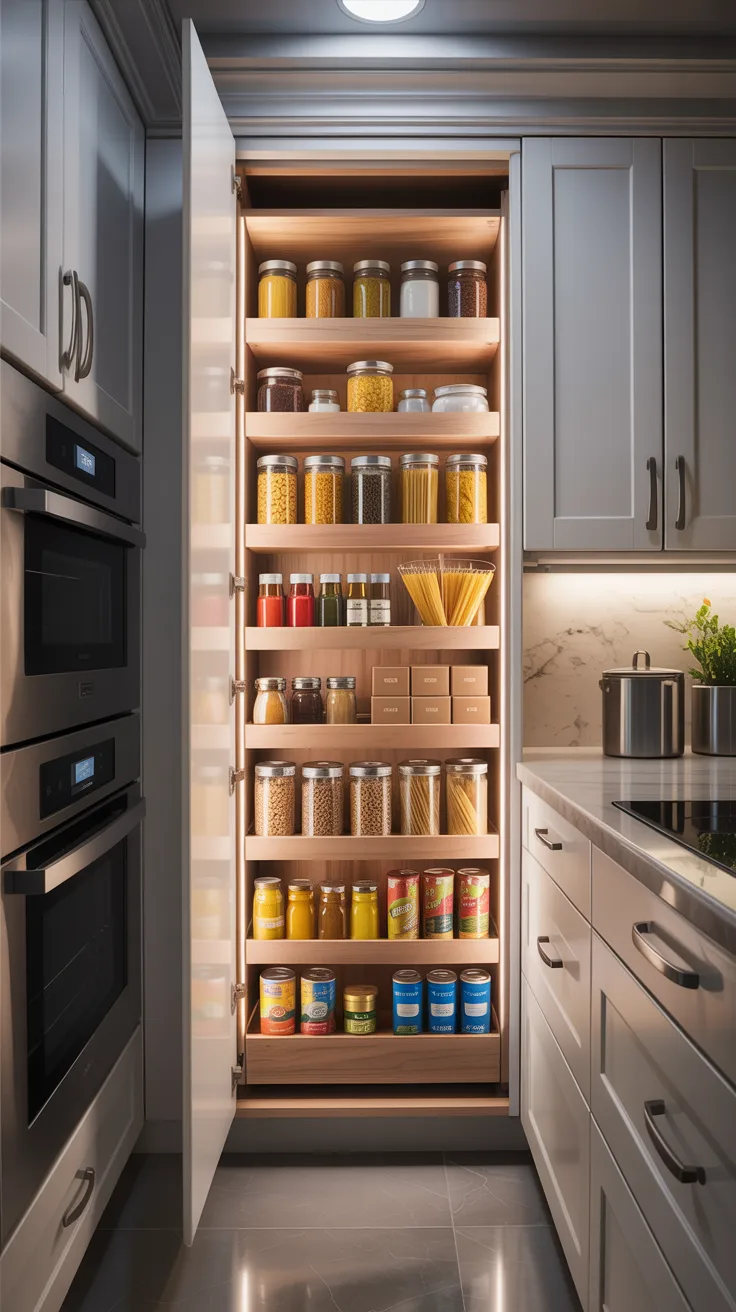
Pull-out pantries offer easy access to dry goods. They can be put between appliances or inside cabinets, making use of dead spaces.
Under-cabinet Organizers
Under-cabinet organizers are great for storing spices, utensils, or cleaning supplies. They keep things out of the way but still easy to get to.
| Storage Solution | Benefits | Best For |
|---|---|---|
| Vertical Storage | Increases storage, creates illusion of more space | Small kitchens, infrequently used items |
| Multi-Purpose Workstations | Reduces clutter, increases functionality | Kitchens with limited counter space |
| Hidden Storage | All kitchens, especially those with limited cabinet space | Increases storage, creates an illusion of more space |
By using these strategies, you can make a modern kitchen that’s both efficient and looks great.

Galley Kitchen Layouts: Making Narrow Spaces Work
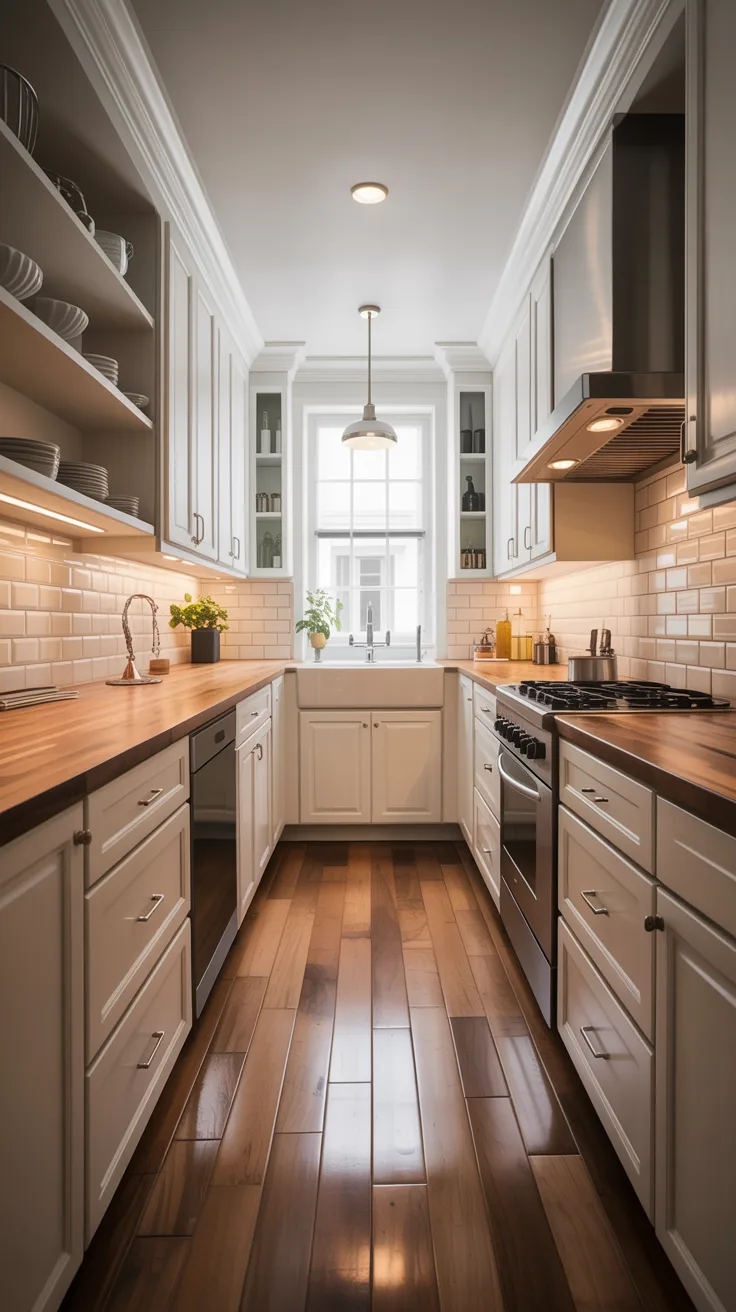
In modern kitchens, galley layouts are gaining popularity for their efficiency.
A well-designed galley kitchen can make cooking a joy, even in tight spaces.
Focus on optimizing the layout, creating visual continuity, and using effective lighting.
Optimizing Parallel Countertops
One key challenge in a galley kitchen is using the parallel countertops well. To do this, apply the work triangle concept.
Make sure your sink, stove, and fridge form a triangle to reduce walking and improve workflow. Use wall-mounted shelves or pot racks to keep items within reach.
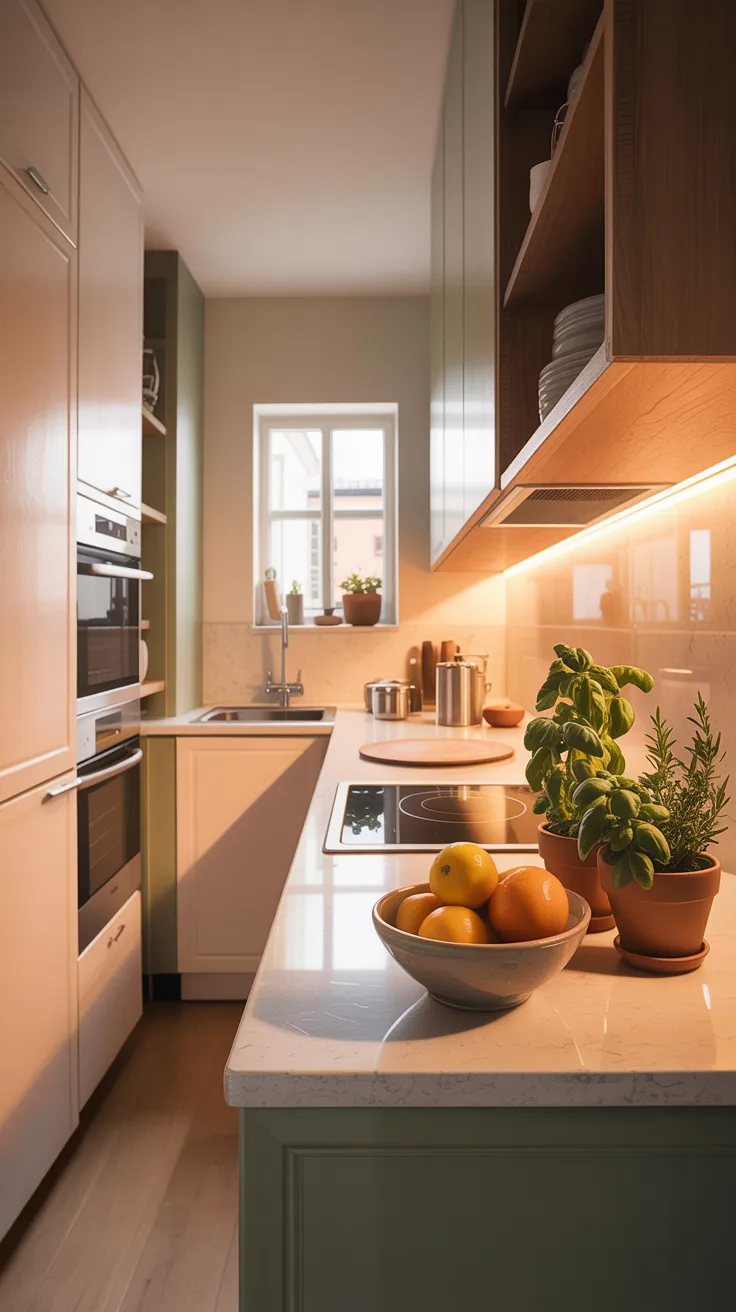
Tips for Optimizing Parallel Countertops:
- Use a consistent countertop material for continuity.
- Install wall-mounted storage to clear countertops.
- Choose compact appliances to save space.
Creating Visual Continuity
Visual continuity is key in a galley kitchen to make it feel larger.
Use a consistent color scheme, flooring, and cabinetry. Match your countertops and backsplash to create a seamless look.
A unified design approach can make your galley kitchen feel more spacious and harmonious.
Lighting Strategies for Galley Kitchens
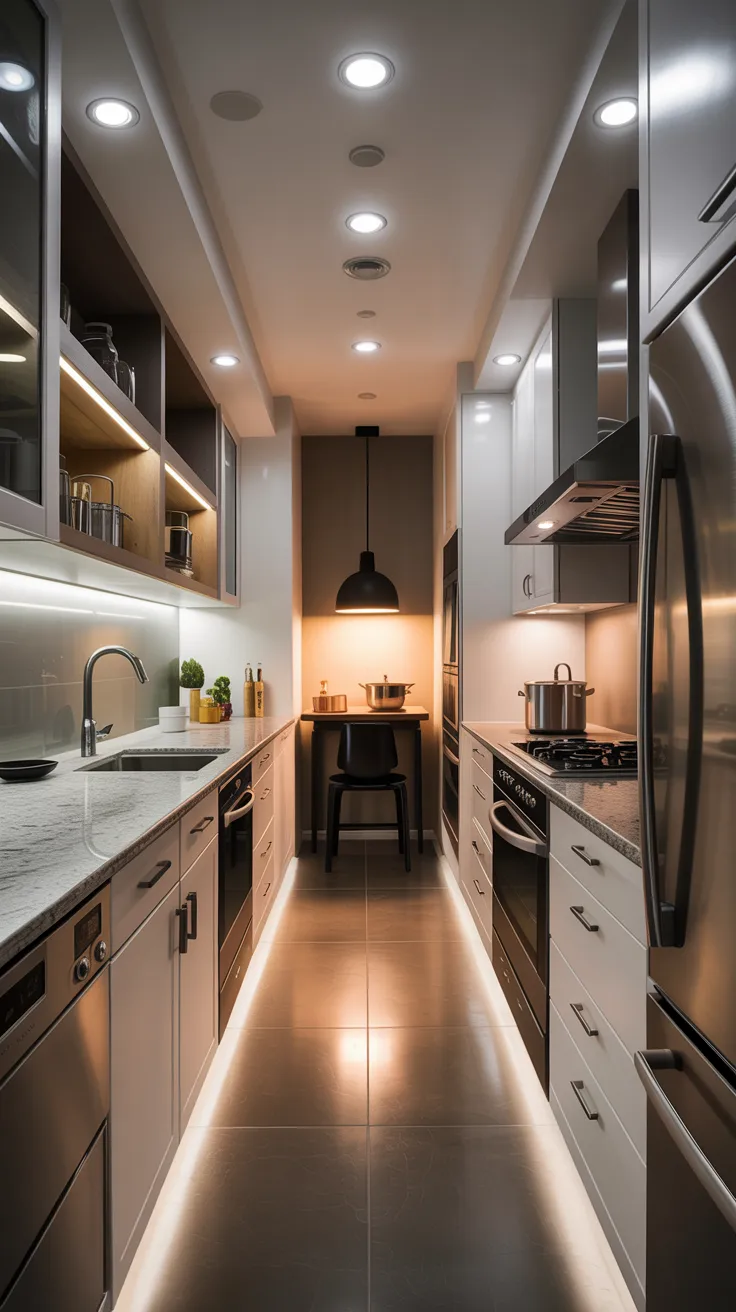
Lighting in a galley kitchen is crucial for ambiance and functionality.
Use a layered lighting approach with overhead, task, and ambient lighting. Under-cabinet lighting adds warmth and invites you in.
| Lighting Type | Purpose | Examples |
|---|---|---|
| Overhead Lighting | General illumination | Recessed lights, ceiling fixtures |
| Task Lighting | Focused lighting for tasks | Under-cabinet lights, pendant lights |
| Ambient Lighting | Creating ambiance | LED strips, dimmable lights |
By using these strategies, you can create a functional and beautiful galley kitchen. It will meet your needs and enhance your cooking experience.
L-Shaped Kitchen Designs for Corner Optimization
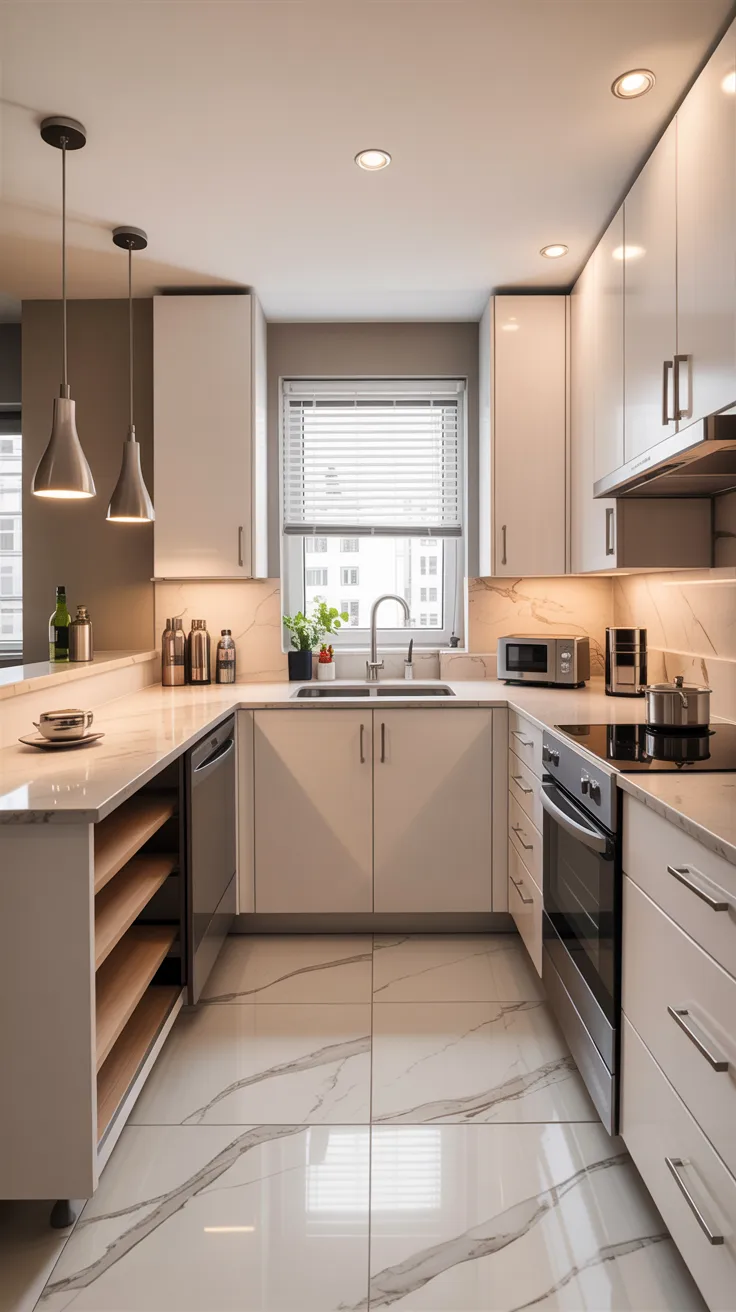
L-shaped designs are great for making the most of your kitchen space.
They help you use corners better, set up efficient work areas, and add open shelving for a stylish look.
Maximizing Corner Functionality
Corner spaces in kitchens can be tricky to use well. But an L-shaped design makes them useful. Consider using corner cabinets or carousels to make the most of these areas.
| Corner Solution | Description | Benefits |
|---|---|---|
| Corner Cabinets | Storage units designed for corner spaces | Maximizes storage, easy access |
| Carousels | Rotating storage units | Enhances accessibility, reduces clutter |
Creating Work Triangles in L-Shaped Spaces
The work triangle concept is key in kitchen design. It makes sure cooking, sink, and storage areas are set up for best efficiency.
In an L-shaped kitchen, place these elements along the L’s arms to form a work triangle.

Open Shelving Approaches
Open shelving is perfect for adding storage and showing off your kitchen’s style. Use floating shelves or reclaimed wood to bring warmth and personality to your kitchen.
With these elements, you can make a kitchen that looks great and works well.
An L-shaped design with smart corner use, efficient work areas, and stylish open shelving can turn your kitchen into a cozy, intentional space.
Open-Concept Kitchen Layouts for Social Connectivity
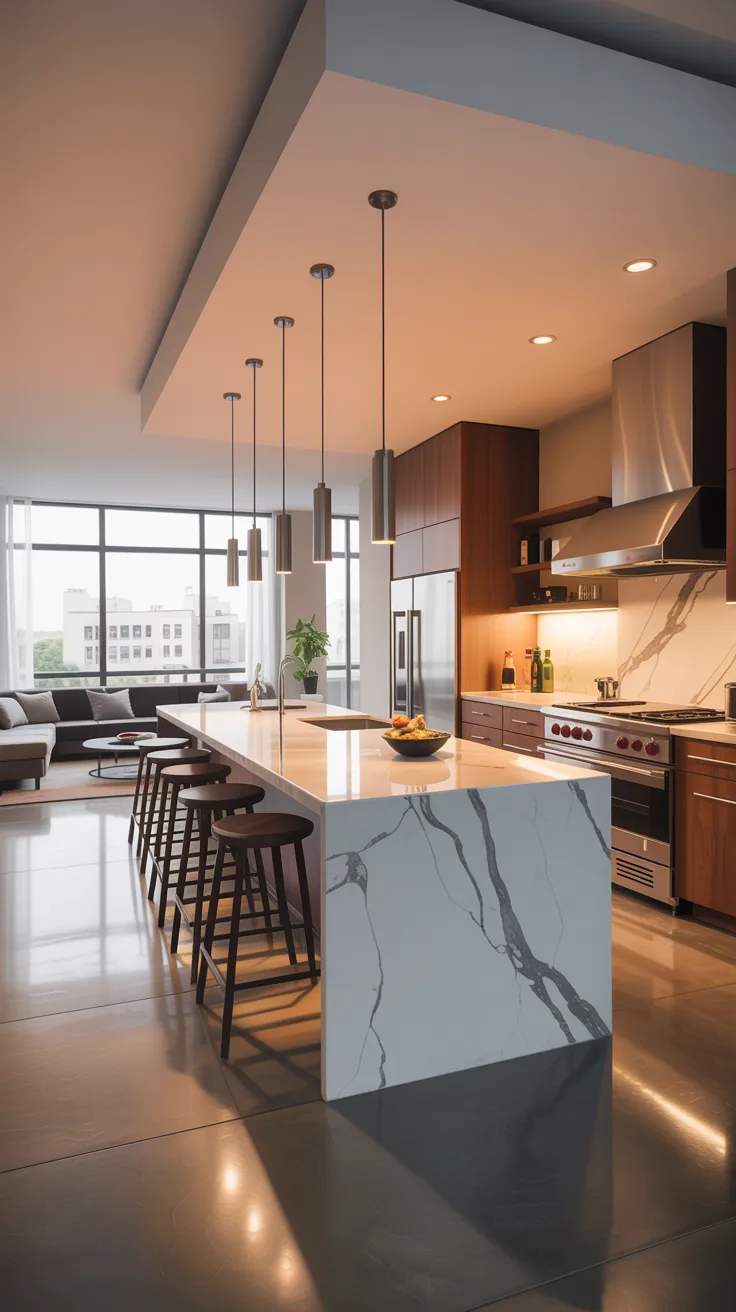
Creating a kitchen that’s more than just for cooking is easy with an open-concept layout.
This design brings the kitchen together with other living areas. It makes your home more connected and sociable.
Defining Zones Without Walls
In an open-concept kitchen, it’s key to define zones without walls. You can do this by:
- Flooring changes: Using different materials or colors to mark spaces.
- Furniture placement: Placing furniture to create separate areas in the open space.
- Lighting design: Using different lights to show where one zone ends and another begins.

Maintaining Visual Cohesion
To keep the look of your open-concept kitchen cohesive, try these tips:
- Unify with color: Stick to a single color scheme for all zones to tie them together.
- Select complementary materials: Pick materials and textures that work well together in the open space.
Transitional Elements Between Spaces
Transitional elements are vital in linking different areas in an open-concept layout. They include:
- Kitchen islands: Acting as both a work area and a visual separator.
- Peninsulas: Adding counter space while defining the kitchen area.
By adding these elements, you can make a modern kitchen that’s not only stylish but also boosts your home’s social vibe.
Material and Texture Choices for Cozy Kitchen Atmospheres
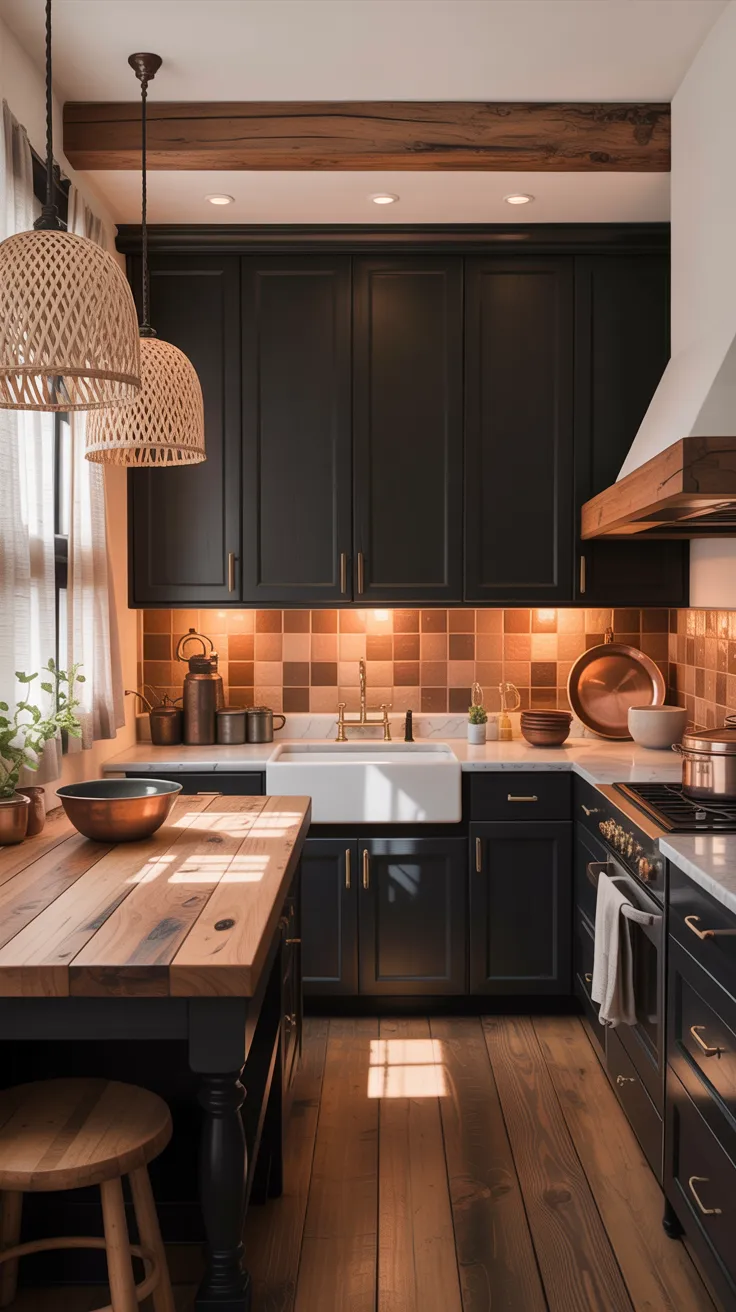
Choosing the right materials and textures is key to a cozy kitchen. The feel of your kitchen depends on these choices.
It’s important to think about how they work together to make your kitchen warm and inviting.
Warm vs. Cool Material Palettes
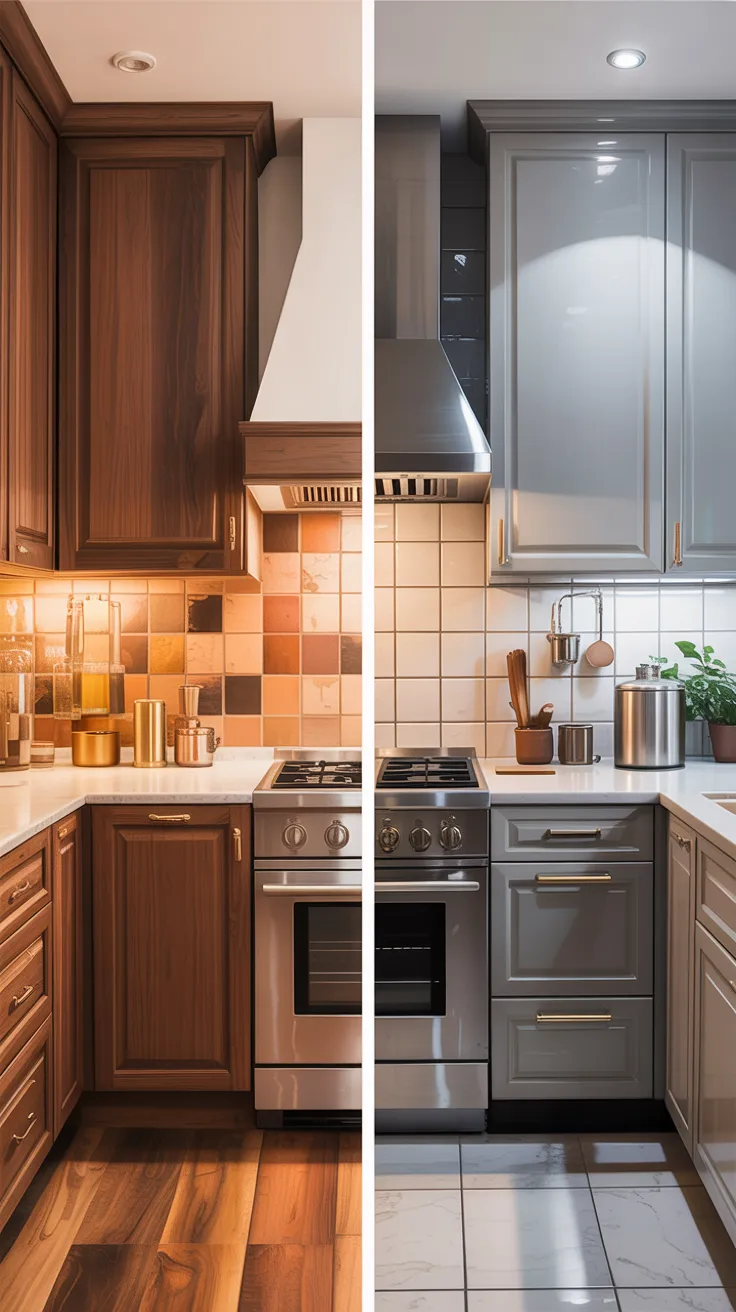
Warm and cool material palettes can change your kitchen’s feel. Warm tones and natural materials make a cozy space. Cool tones and modern materials make it sleek.
Mixing both can create a balanced look that’s both beautiful and practical.
- Warm materials: Wood, terracotta, and warm-toned metals
- Cool materials: Stainless steel, glass, and cool-toned ceramics
Incorporating Natural Elements
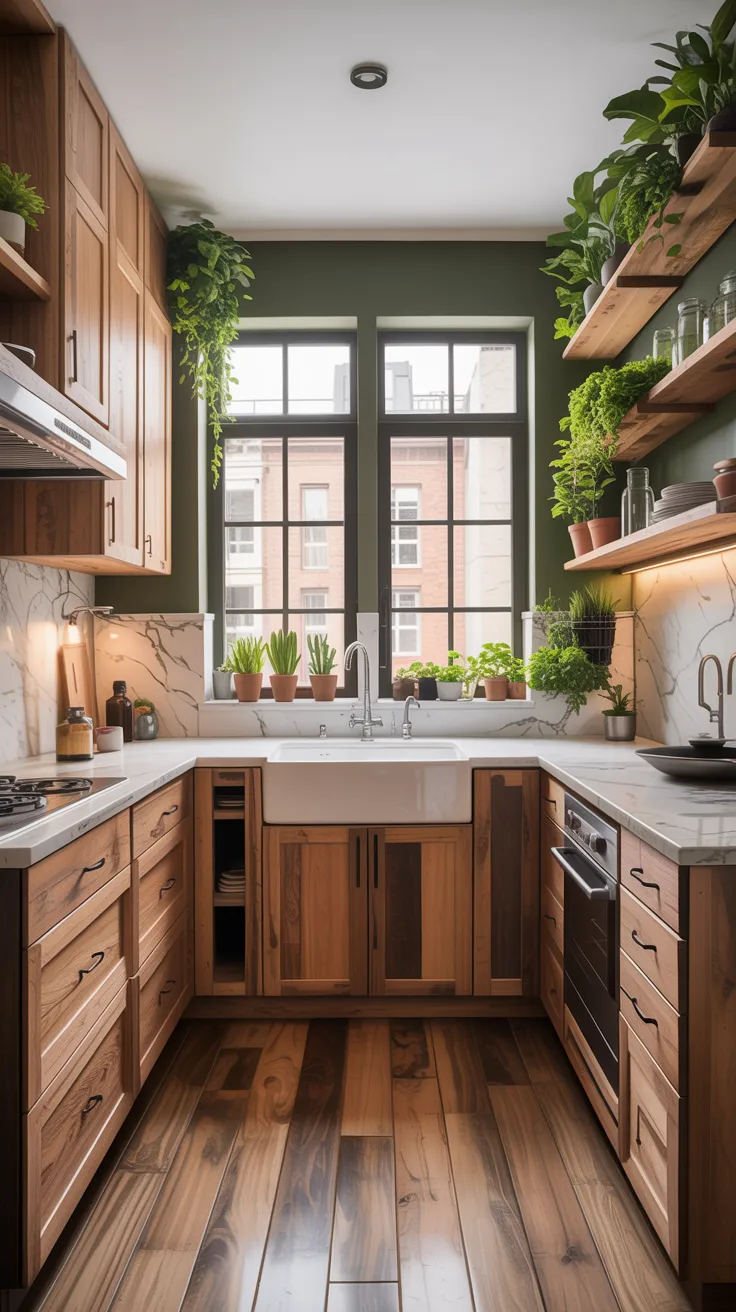
Adding natural elements to your kitchen design adds depth and warmth. Use natural stone, wood, or plants to bring the outdoors in.
These elements make your kitchen look great and feel cozy.
Natural elements to consider:
- Reclaimed wood for cabinets or flooring
- Natural stone countertops
- Indoor plants or a living wall
Textural Contrasts That Create Depth
Textural contrasts make your kitchen interesting and cozy. Mixing textures adds depth and layers to your space.
Wood and Stone Combinations
Wood and stone together is a classic choice for texture.
The warmth of wood and the coolness of stone create a cozy atmosphere.
“The combination of natural materials like wood and stone can elevate the aesthetic of your kitchen, making it feel more grounded and cozy.” – Design Expert
Soft Textiles in Hard-Surface Environments
Adding soft textiles to a hard-surface kitchen softens it.
Use rugs, towels, or textile wall hangings to add warmth and comfort.
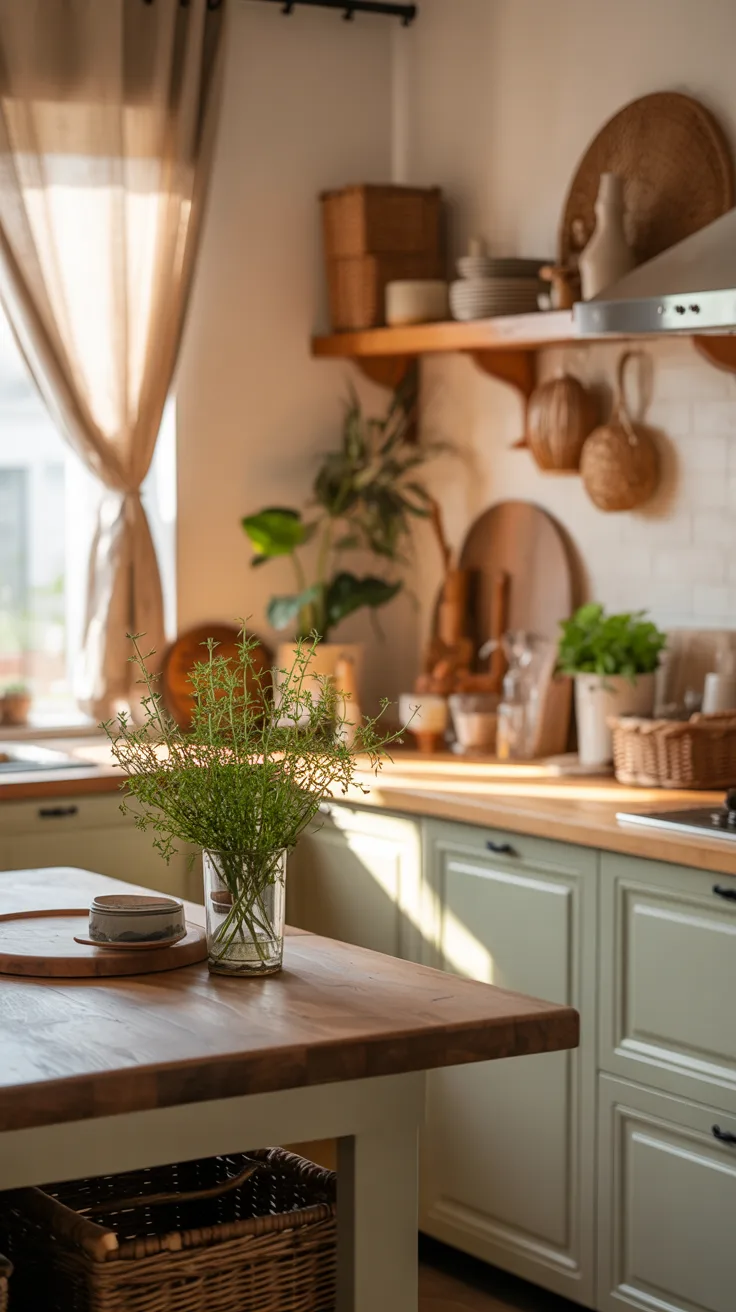
By carefully choosing materials and textures, you can make your kitchen cozy and beautiful.
Whether you’re looking for ideas on Pinterest or working with a designer,
these tips will help you create the warm kitchen you want.
Intentional Lighting Design for Apartment Kitchens
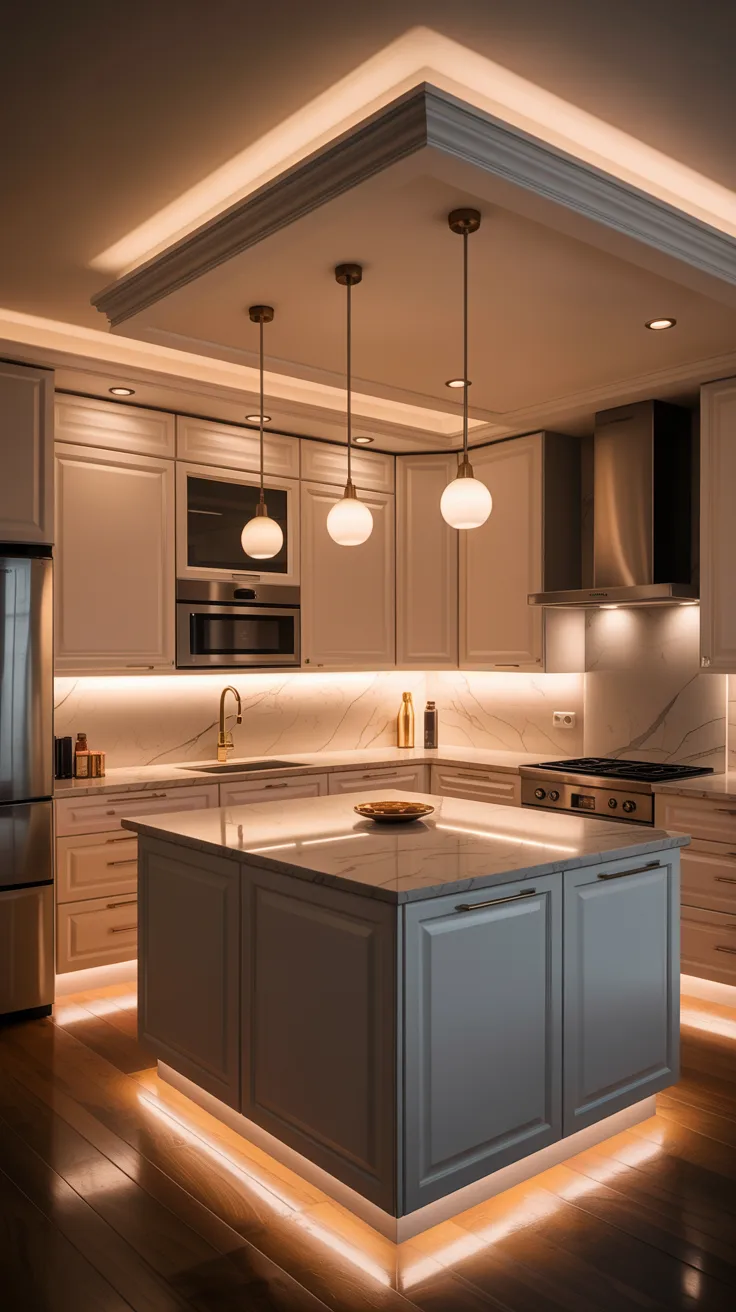
A well-designed lighting plan can turn your kitchen into the heart of your home.
It’s where memories are made and moments are shared. When planning your kitchen, lighting should be a top priority.
It’s not just about lighting up your countertops and cooking surfaces. It’s about creating a space that feels comfortable and inspires you.
Layered Lighting Approaches
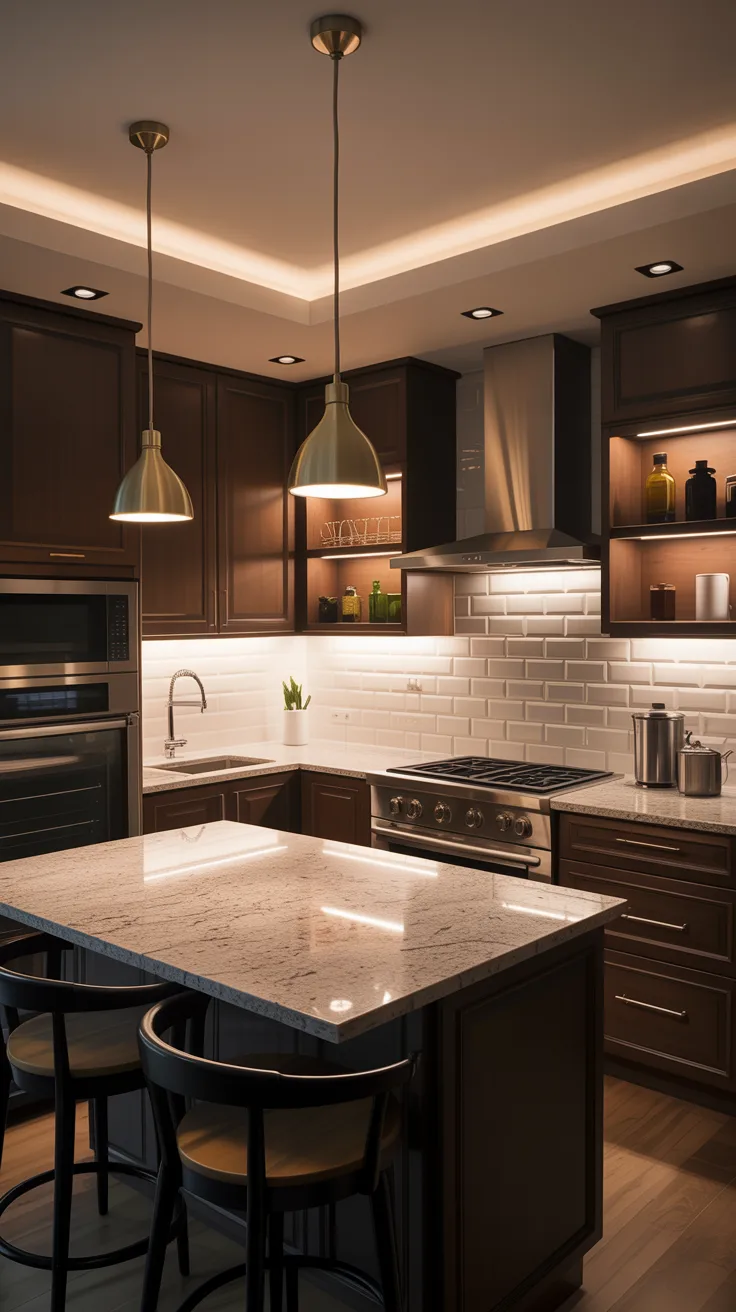
A layered lighting approach is key to a visually appealing and functional kitchen.
You need different light sources for a balanced effect.
Start with ambient lighting for the overall mood, then add task lighting for specific areas like countertops and sinks.
Finish with accent lighting to highlight decorative features or architectural details.
For example, use a mix of overhead lighting, under-cabinet lighting, and pendant lights above an island or peninsula.
This layering improves your kitchen’s functionality and adds depth and visual interest.
Task Lighting Placement
Task lighting is essential in the kitchen for clear visibility.
Place lights under cabinets, above countertops, or inside cabinets for effective illumination.
LED strip lights under your cabinets offer a modern and energy-efficient solution.
Ambient Lighting for Atmosphere
Ambient lighting sets the tone for your kitchen, making it warm and inviting.
Use overhead lighting fixtures like recessed lights or a stylish chandelier.
The goal is a soft, gentle glow that welcomes you.
Under-cabinet Lighting Solutions
Under-cabinet lighting is both functional and adds a sleek, modern touch.
LED lights are popular for their energy efficiency and flexibility.
Choose from various colors and brightness levels to match your kitchen’s ambiance.
Statement Fixtures for Visual Interest
Statement lighting fixtures can add personality and style to your kitchen.
Consider a bold pendant light above your island or a dramatic chandelier in a dining area.
These fixtures can elevate your kitchen’s elegance and sophistication.

| Lighting Type | Purpose | Examples |
|---|---|---|
| Ambient Lighting | Sets overall mood and atmosphere | Overhead fixtures, Chandeliers |
| Task Lighting | Illuminates specific work areas | Under-cabinet lights, Pendant lights |
| Accent Lighting | Highlights decorative features | LED strips, Spotlights |
By incorporating a thoughtful lighting design, you can transform your apartment kitchen into a warm, inviting space.
Whether you’re cooking or gathering with friends, the right lighting can make all the difference.
Conclusion: Creating Your Personalized Kitchen Haven
Now that you’ve looked at different design ideas for your kitchen, it’s time to make it real. You can create a kitchen that’s calm, cozy, and truly yours.
By using the tips we’ve shared, you can make a space that shows off your style and meets your needs.
Consider how your kitchen flows, the materials and textures you love, and the lighting that makes cooking fun. No matter the layout, aim for a balance that looks good and works well.
Your kitchen should be a place where you can cook, share moments, and make memories.
Starting this design journey means your kitchen will showcase your unique style. Feel free to try new things and make it your own.
With some creativity and planning, you can make your kitchen a warm and welcoming place that feels like home.


